
Strait of Hormuz Closed Again as Iran Confirms No Date for Next US Negotiations
Zero Signal Staff
Published April 18, 2026 at 8:42 AM ET · 181 days ago
BBC, Al Jazeera
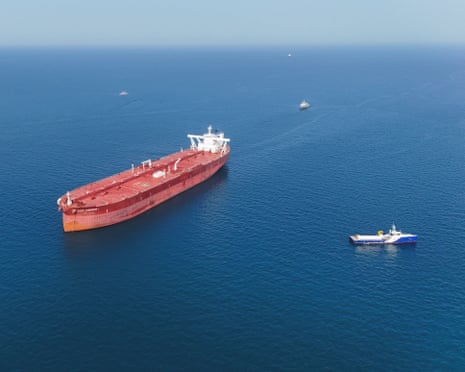
Iran has re-closed the Strait of Hormuz, citing a continuing U.S. naval blockade of its ports as the primary catalyst.
Iran has re-closed the Strait of Hormuz, citing a continuing U.S. naval blockade of its ports as the primary catalyst. This escalation comes as Pakistan's Foreign Ministry confirmed Thursday that no date has been set for the next round of negotiations between Washington and Tehran. The return to hostilities in the strategic waterway follows a brief, 24-hour window where the passage had been declared open.
The Details
The Islamic Revolutionary Guard Corps (IRGC) announced Saturday that the Strait of Hormuz has returned to its 'previous state' of restricted access. The IRGC characterized the U.S. blockade of Iranian ports as 'acts of piracy and maritime theft'. The closure was immediately felt on the water, with the UK Maritime Trade Operations (UKMTO) reporting that at least two merchant vessels were hit by gunfire. One tanker specifically reported being fired upon by two IRGC gunboats.
This latest closure represents a sharp reversal from Friday, when Iranian Foreign Minister Abbas Araghchi had declared the Strait 'completely open' following the announcement of a ceasefire between Israel and Hezbollah in Lebanon. However, the opening was short-lived; Iran reversed course after the U.S. maintained its naval blockade, which began on April 13. U.S. Central Command (CentCom) stated that American forces have turned away 23 ships near the Strait since the blockade commenced.
Simultaneously, diplomatic efforts to stabilize the region are stalling. Pakistan's Foreign Ministry confirmed that despite intensified efforts from Islamabad to sustain the 'Islamabad Process,' no timeline for the next round of US-Iran talks has been established. The first round of negotiations, held on April 12 in Islamabad, lasted 21 hours but ended without an agreement. Following those talks, U.S. Vice President JD Vance stated the U.S. had presented its 'final and best offer,' while Iranian Parliamentary Speaker Mohammad Bagher Ghalibaf noted that the U.S. had failed to gain the trust of the Iranian delegation.
Further complicating the tension are contradictory claims regarding nuclear concessions. President Trump asserted via Truth Social that Iran had agreed to never close the Strait of Hormuz again and would surrender its stockpile of highly enriched uranium. Iran has categorically denied these claims. Foreign Ministry spokesperson Esmail Baghaei stated that enriched uranium is 'as sacred' as Iranian soil and will not be transferred under any circumstances.
Context
The current crisis is part of a larger military campaign involving U.S. and Israeli forces against Iran that began on February 28, 2026. For approximately 50 days, the region has seen intermittent warfare and strategic maneuvering. The Strait of Hormuz, through which roughly 20% of the world's oil flows, has served as Iran's primary strategic lever, remaining closed for most of the conflict except for brief windows and specific bilateral agreements.
Domestic pressure in Iran remains high; the country has been under a government-enforced internet blackout for 50 days. This has forced citizens to rely on expensive Starlink access, costing approximately $6 per gigabyte in a country where average monthly salaries range from $200 to $300.
International reactions have been swift. UK Prime Minister Keir Starmer and French President Emmanuel Macron have announced an international mission to protect the freedom of navigation in the Strait as soon as conditions allow. This follows a virtual meeting with 40 other nations to coordinate a response to the maritime instability.
What's Next
The immediate focus now turns to April 22, the expiration date of the two-week ceasefire brokered by Pakistan on April 8. This ceasefire halted U.S.-Israeli attacks on Iran but is now under extreme strain due to the maritime clashes and the blockade. If the ceasefire expires without a diplomatic breakthrough, a return to full-scale aerial and naval strikes is likely.
Pakistan continues to play a pivotal role as the sole mediator trusted by Tehran. Field Marshal Asim Munir recently completed a three-day visit to Tehran, and Prime Minister Shehbaz Sharif has traveled to Saudi Arabia, Qatar, and Turkiye to sustain the peace process. Iran continues to insist that any final agreement with the U.S. must include a resolution to the conflict in Lebanon, linking the two theaters of operation.
Global energy markets are expected to remain volatile. While oil prices dipped below $91 following Friday's temporary reopening of the Strait, Saturday's re-closure and the reports of gunfire against merchant vessels create new uncertainty for global supply chains.
Never Miss a Signal
Get the latest breaking news and daily briefings from Zero Signal News directly to your inbox.