
Sudan's War Reaches Fourth Year With 13 Million Displaced and Famine Spreading
Zero Signal Staff
Published April 16, 2026 at 1:43 PM ET · 183 days ago
AP News
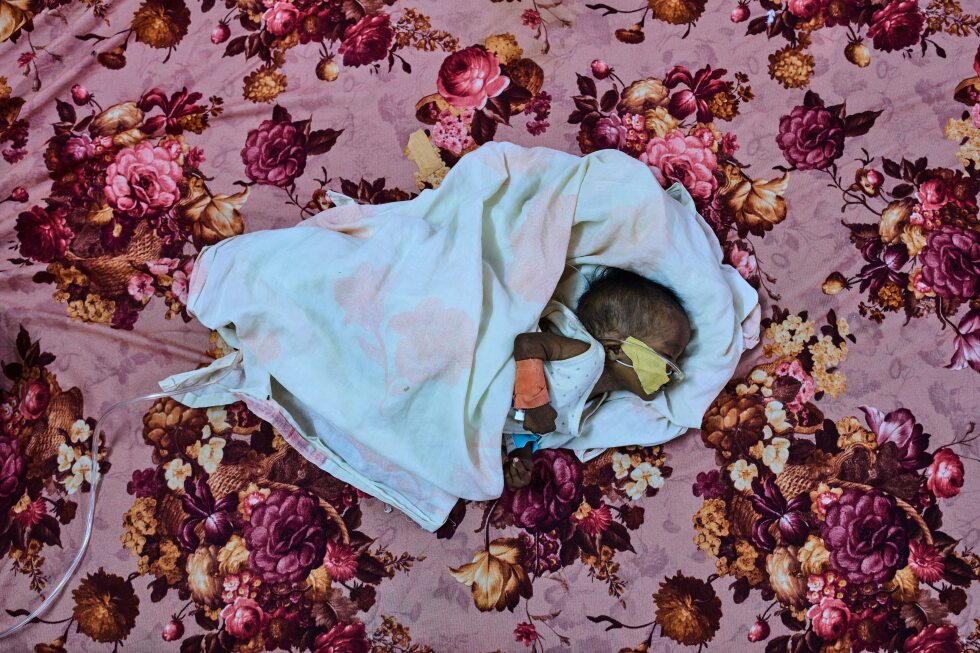
Sudan entered its fourth year of conflict on April 15, 2026, marking a grim milestone in a war that has killed at least 59,000 people, displaced roughly 13 million, and created what UN officials describe as the world's largest humanitarian emergency.
Sudan entered its fourth year of conflict on April 15, 2026, marking a grim milestone in a war that has killed at least 59,000 people, displaced roughly 13 million, and created what UN officials describe as the world's largest humanitarian emergency. The three-year struggle between the Sudanese Armed Forces and the paramilitary Rapid Support Forces has fractured the country into competing zones of control, with the RSF establishing a rival administration in Darfur while the SAF maintains hold over the capital, Khartoum. Nearly 29 million Sudanese face acute hunger, with severe malnutrition expected to affect 800,000 people by year's end.
The Details
The conflict began as a power struggle between military rivals who had together orchestrated a coup two years earlier. General Abdel-Fattah Burhan, who leads the SAF, and General Mohamed Hamdan Dagalo—known as Hemedti—who commands the RSF, broke with each other over the terms of integrating the paramilitary force into the official armed forces. The fighting rapidly evolved into a territorial war with genocidal undertones, particularly in Darfur.
Evidence of mass atrocities has accumulated steadily. In October 2025, RSF forces swept through el-Fasher in Darfur over three days, killing at least 6,000 people in what UN-backed experts concluded bore the defining characteristics of genocide. The Red Cross has documented more than 11,000 people missing across the war zone. Rape and sexual violence have been systematized as weapons of war. Aid worker Mohammed Tijani, speaking from Darfur, described simply: "Here you can see the sorrow, here you can see the hunger."
The humanitarian toll reflects months of deliberate obstruction of aid and the systematic destruction of Sudan's food systems. More than two-fifths of the community kitchens that sustained displaced populations have closed in just the past six months. A Norwegian Refugee Council survey of 1,293 displaced households found 90 percent had lost their homes, 80 percent regularly skip meals, and 65 percent have been separated from family members. The violence, according to aid groups, has eroded Sudan's agricultural infrastructure and supply chains field by field and market by market.
Regional powers have enabled the bloodshed by backing combatants behind the scenes. Growing evidence points to the United Arab Emirates as a key supporter of both sides, supplying weapons and material that keep the war grinding forward. International diplomatic efforts have stalled. A peace plan advanced by the "Quad"—the United States, Saudi Arabia, the UAE, and Egypt—in September 2025 has made no progress. US envoy Massad Boulos continues to push for at least a humanitarian ceasefire, but there are no reports of meaningful movement.
The scale of need far exceeds available resources. The UN has calculated a $2.87 billion assistance requirement for 2026, but only 16.2 percent has materialized. On April 15, 2026—the war's third anniversary—Germany hosted an international donor conference in Berlin aimed at closing the funding gap. The conference raised €1.3 billion, a significant sum that nevertheless falls short of current projections. UK Foreign Secretary Yvette Cooper announced a doubling of British aid to £15 million and called for immediate action, saying: "I will call for the international community to join in a shared resolve: to secure a ceasefire and a diplomatic solution, to stop the suffering."
Yet Sudan's government rejected the Berlin conference as outside interference, underscoring the political gridlock surrounding humanitarian access. Global fuel and fertilizer prices, inflated by escalating tensions in the Middle East, have compounded the food crisis. UN humanitarian chief Tom Fletcher characterized Sudan as an atrocities laboratory and warned that the failure to act represents a collective moral failure.
Context
Sudan's descent into war followed a narrow window of democratic transition. In 2019, a popular uprising overthrew dictator Omar al-Bashir, who had ruled since 1989. A transitional civilian government was established with the support of both Burhan and Hemedti, who jointly led a sovereign council overseeing the military's integration into civilian rule. That arrangement collapsed in October 2021 when Burhan and Hemedti orchestrated a coup d'état, reversing the democratic transition and consolidating their shared control. For roughly eighteen months, the two generals ruled together. Tensions over rival visions for the future military structure, combined with competition for resource control and power, fractured their alliance.
When fighting erupted in April 2023, it was framed as a turf war within Khartoum's military establishment. It rapidly spread into a proxy conflict drawing in regional powers. The RSF, originally formed as a counterinsurgency militia in Darfur under al-Bashir, evolved into a force with independent political ambitions. Its capture of large swaths of western Sudan, particularly Darfur and Kordofan, established facts on the ground that a military victory alone cannot easily undo. Sudan now operates as a de facto divided state with competing governments issuing parallel decrees, collecting separate revenues, and controlling separate territories.
The humanitarian emergency is rooted in deliberate policy. Both sides have weaponized food and medicine. The blockade of Khartoum by RSF forces has strangled supply lines. Fighting has destroyed clinics, schools, and administrative infrastructure. The harvest has been catastrophic due to fighting in agricultural areas during planting and growing seasons. Displaced populations, numbering between 13 and 14 million depending on the counting methodology, lack the basic resources to survive independently.
What's Next
International pressure to broker a ceasefire continues but faces the hard reality that neither side sees compelling incentive to stop. The SAF holds Khartoum and key urban centers but faces a strengthened RSF that controls territory and sustains battlefield momentum in the west. Ceasefires in past Sudanese conflicts have collapsed when underlying political questions remained unresolved. The UN estimates that a sustainable humanitarian response would require not merely funding but an end to active combat that permits food distribution, agricultural recovery, and reconstruction of basic services.
The Berlin conference and subsequent pledges may marginally improve access in contested areas, but they do not address the root driver: the war itself. International actors face a paralysis familiar from other protracted African conflicts. Military intervention remains politically off the table for major powers. Diplomatic channels operate, but both the SAF and RSF perceive continued fighting as preferable to the political compromises a settlement would demand. The displaced population and the starving have no voice in these calculations.
Never Miss a Signal
Get the latest breaking news and daily briefings from Zero Signal News directly to your inbox.