
Supreme Court Rules Louisiana Environmental Lawsuits Against Oil Companies Belong in Federal Court
Zero Signal Staff
Published April 19, 2026 at 7:39 AM ET · 161 days ago
AP News
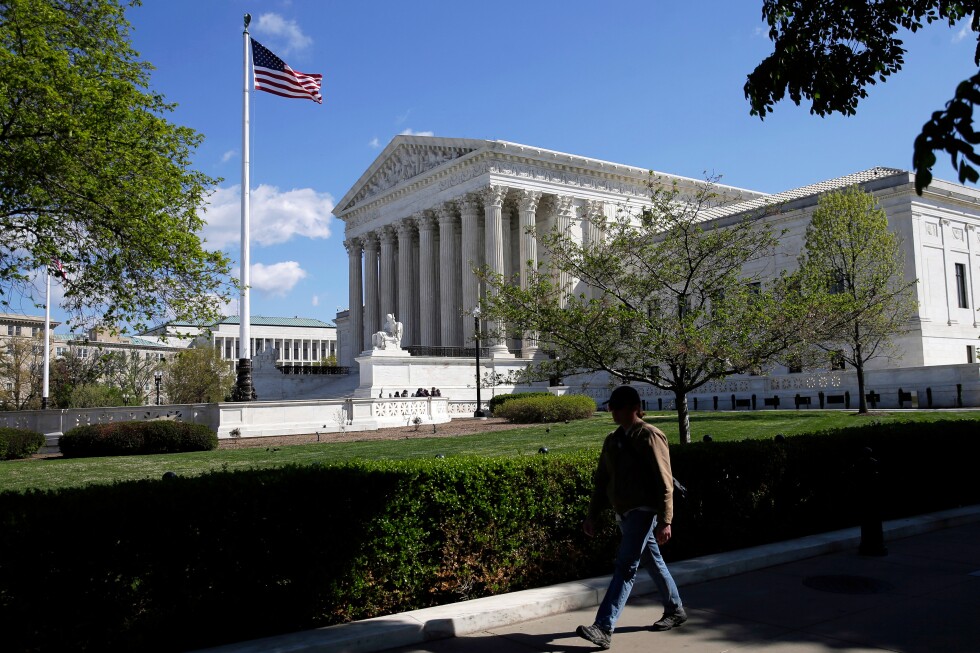
The U.S. Supreme Court ruled unanimously on April 17, 2026, that environmental lawsuits against oil and gas companies regarding coastal land loss in Louisiana must be heard in federal court.
The U.S. Supreme Court ruled unanimously on April 17, 2026, that environmental lawsuits against oil and gas companies regarding coastal land loss in Louisiana must be heard in federal court. The 8-0 decision overturns a 2024 Fifth Circuit Court of Appeals ruling and provides a significant legal victory for energy companies. The ruling establishes a broader interpretation of the federal officer removal statute, allowing companies to shift cases from state to federal jurisdictions if the claims bear a meaningful connection to federal duties.
The Details
Justice Clarence Thomas authored the majority opinion in Chevron USA Inc. v. Plaquemines Parish, Louisiana. The Court held that the lawsuits 'relate to' Chevron's wartime federal duties under the federal officer removal statute (28 USC §1442). This statute grants federal courts jurisdiction over cases against federal officers or their agents. The case specifically centered on Chevron's predecessors, including Texaco, which served as federal contractors during World War II producing aviation gasoline for the U.S. military. Chevron argued that because the challenged activities were linked to these federal duties, the cases were eligible for removal to federal court.
The Supreme Court explicitly rejected the reasoning of the Fifth Circuit, which had previously held that while the companies were acting under a federal officer, the Louisiana lawsuits did not sufficiently 'relate to' those specific duties. Justice Thomas wrote that the phrase 'relating to' is broad and does not require defendants to prove that federal duties 'specifically required or strictly caused the challenged conduct.'
Justice Ketanji Brown Jackson concurred with the final judgment but issued a separate opinion. She argued that the statute should require a more direct cause-and-effect relationship between the federal duties and the challenged conduct, suggesting a stricter legal standard than the broad approach adopted by Justice Thomas.
Justice Samuel Alito did not participate in the decision, recusing himself due to financial ties to ConocoPhillips, another defendant in related litigation. The ruling is expected to affect approximately one-quarter of the 42 lawsuits filed in 2013 by Louisiana coastal parishes against oil and gas firms, including Chevron and Exxon.
A spokesperson for Chevron stated the company 'looks forward to litigating these cases in federal court, where they belong.' Conversely, John Carmouche, an attorney for local Louisiana leaders, stated that changing the venue would not deter efforts to hold 'Big Oil' accountable for coastal damages and the subsequent restoration owed to the state.
Context
The legal battle stems from the massive loss of coastal land in Louisiana. According to the U.S. Geological Survey, the region has lost more than 2,000 square miles of land over the last century, with oil and gas infrastructure identified as a significant cause. Louisiana's state coastal protection agency has warned that another 3,000 square miles could vanish in the coming decades.
In 2013, 42 coastal parishes filed suits alleging that oil companies violated the State and Local Coastal Resources Management Act of 1978, which prohibits certain uses of the coastal zone without permits. While the act exempted uses legally commenced before 1980, the parishes argue that decades of oil and gas activity caused irreversible damage. One state jury in Plaquemines Parish had previously ordered Chevron to pay more than $740 million for coastline cleanup.
The litigation has notably crossed traditional political lines. Republican Governor Jeff Landry previously supported the lawsuits during his tenure as attorney general, and Republican Attorney General Liz Murrill noted that the heavy jury awards originated from some of the state's most conservative, pro-energy regions.
What's Next
The immediate impact of the ruling is the relocation of a significant portion of the coastal damage litigation to federal courts. This shift is viewed as a strategic advantage for oil companies, who often find federal courts more favorable for complex corporate litigation and removal motions. The decision also lowers the barrier for other companies to move similar state-level environmental claims into federal jurisdiction by establishing the 'meaningful connection' standard.
Environmental advocates, including the Louisiana Bucket Brigade, describe the ruling as a 'bump in the road' rather than a total blockade. They maintain that the core of the lawsuits—the physical destruction of the coastline—remains a valid legal claim regardless of the venue. However, the transition to federal court may result in different evidentiary standards and procedural hurdles that could delay final judgments.
Industry groups, such as Grow Louisiana, have hailed the decision as an end to lawsuits they claim have 'cost Louisiana billions' and 'padded trial lawyers' pockets.' The legal community will now watch to see how federal judges handle the specific applications of the 1978 Coastal Resources Management Act in these newly transferred cases.
Never Miss a Signal
Get the latest breaking news and daily briefings from Zero Signal News directly to your inbox.