
Suspected Coup Plotters in Nigeria Deny Treason Charges in High-Stakes Legal Battle
Zero Signal Staff
Published April 22, 2026 at 3:29 PM ET · 157 days ago
BBC News
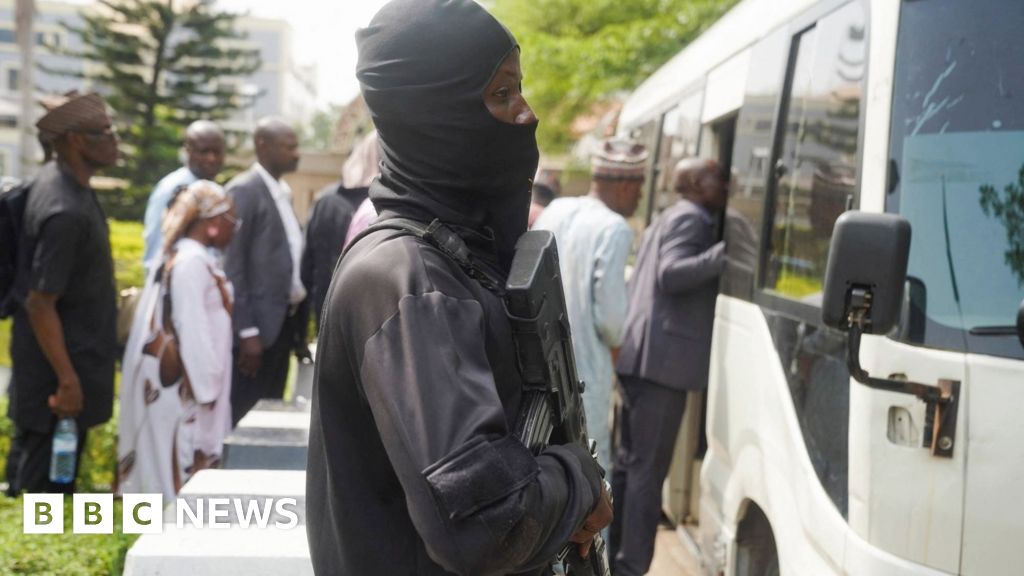
A group of suspected coup plotters in Nigeria has formally denied treason charges brought against them following a failed attempt to overthrow the government.
A group of suspected coup plotters in Nigeria has formally denied treason charges brought against them following a failed attempt to overthrow the government. The defendants, appearing before a high court, have pleaded not guilty to allegations of conspiring to undermine the state. This legal confrontation marks a critical moment in the nation's struggle with recurring military interference in civilian governance.
The Details
The defendants were arrested following intelligence reports suggesting a coordinated effort to seize power through a military-led coup. The prosecution alleges that the suspects, comprising high-ranking military officers and civilian accomplices, engaged in secret meetings to plan the overthrow of the current administration. Evidence presented in preliminary filings includes encrypted communications and financial transfers aimed at securing the loyalty of key garrison commanders.
During the court proceedings, the defense team argued that the charges are politically motivated and lack substantive evidence. They maintain that the accused were targeted for their professional disagreements with the military high command rather than any actual intent to commit treason. The court has seen a flurry of motions as lawyers battle over the admissibility of evidence obtained via intelligence intercepts.
Nigeria's military leadership has reaffirmed its commitment to the democratic process, stating that any attempt to disrupt civilian rule will be met with the full force of the law. The government has increased security around strategic installations in Abuja and other major cities to prevent any secondary attempts at instability.
Human rights organizations have expressed concern over the transparency of the trial, calling for strict adherence to due process to avoid the appearance of a political purge. They emphasize that while coup attempts must be condemned, the legal process must remain impartial and open to scrutiny.
The prosecution is expected to call several witnesses, including intelligence officers and former colleagues of the defendants, to establish a timeline of the conspiracy. The defense intends to challenge the legality of the arrests and the methods used by security services to gather evidence.
Context
Nigeria has a long and complex history of military coups, having experienced numerous successful and failed attempts to seize power since gaining independence in 1960. The transition to a stable civilian democracy in 1999 ended decades of direct military rule, but the specter of the 'man in uniform' returning to politics remains a persistent threat.
Internal frictions within the Nigerian Army, often linked to the distribution of resources, command appointments, and perceived failures in the fight against insurgency, have historically provided the breeding ground for such plots. The current administration has faced criticism over economic instability and security challenges, which plotters often use as a justification for their actions.
This current case is viewed as a litmus test for the strength of Nigeria's judicial system and its ability to handle high-level treason cases without succumbing to political pressure or military influence.
What's Next
The trial is expected to last several months, with key testimony from intelligence agencies providing the bulk of the government's case. A verdict will likely signal whether the current administration can effectively neutralize internal threats or if the military continues to be a volatile element in Nigerian politics.
Observers are watching for potential ripples in the military's rank-and-file; if the trial is perceived as unfair, it could fuel further resentment within the barracks. Conversely, a conviction based on clear evidence may serve as a powerful deterrent against future coup attempts.
Never Miss a Signal
Get the latest breaking news and daily briefings from Zero Signal News directly to your inbox.