
Taiwan Studies Ukraine's Drone War Lessons as It Pivots to Asymmetric Defense
Zero Signal Staff
Published May 5, 2026 at 1:49 AM ET · 160 days ago
The New York Times
Taiwan is looking to Ukraine's wartime experience for lessons on defense, particularly drone warfare, while unofficial contacts between Ukrainians and Taiwanese are expanding despite the absence of formal diplomatic or military ties, The New York Tim
Taiwan is looking to Ukraine's wartime experience for lessons on defense, particularly drone warfare, while unofficial contacts between Ukrainians and Taiwanese are expanding despite the absence of formal diplomatic or military ties, The New York Times reported.
The Details
The New York Times, in a May 5 report, said unofficial connections between Ukrainians and Taiwanese are growing around shared defense interests, especially drone warfare. The expansion of these contacts comes even though Taipei and Kyiv maintain no formal diplomatic relations and no official military-to-military links.
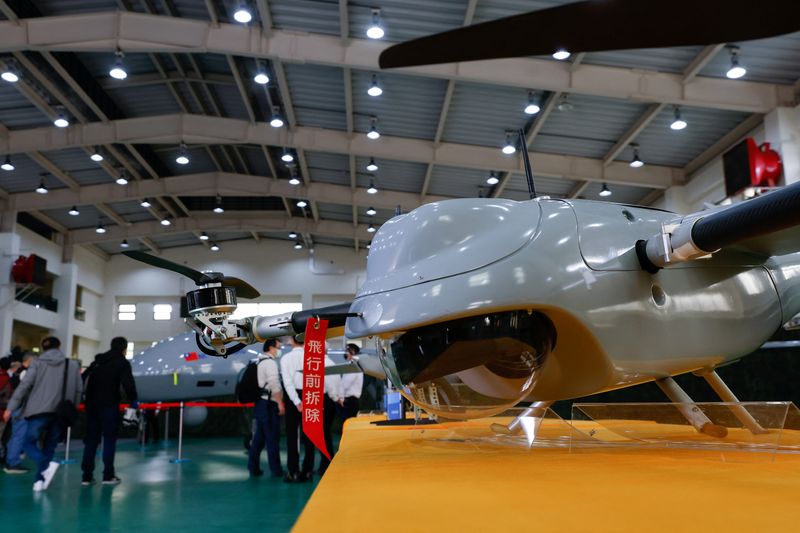
UPI reported on April 23 that Taiwan is accelerating a shift toward drone-centric, asymmetric defense built around large volumes of lower-cost, domestically produced systems rather than traditional heavier platforms. According to UPI, government plans call for procurement of up to two hundred thousand drones over the coming decade, which officials describe as part of a whole-of-society resilience approach.
The Washington Times reported on April 9 that analysts see lessons from both Ukraine and Iran for Taiwan's coastal defense. The analysis argued that newer surveillance and precision-strike technologies can help smaller defenders threaten stronger navies operating near defended coastlines.
Taiwan's defense debate now centers heavily on asymmetric systems that can complicate an invasion or blockade rather than attempting to mirror China's force structure platform-for-platform, UPI reported.
Molly Campbell told UPI that the developing approach is about mass, not just swarms. 'It's not really about 'swarms' yet,' she said. 'It's about mass. Large volumes of drones used in salvos to overwhelm defenses and increase the probability of a successful strike.'
Grant Newsham, in comments to The Washington Times on coastal-defense lessons, said navies have faced elevated risk near defended coastlines for centuries. 'Navies have always had to be careful when operating near defended coastlines, at least since the 'Age of the Cannon' centuries ago,' he said. 'Modern surveillance systems and long-range precision weapons have made things even more dangerous, out to a much farther distance.'
Context
Analysts tracking Taiwan argue that domestic drone and air-defense production is likely to be a critical component of the island's defense posture. The shift toward lower-cost, high-volume unmanned systems reflects a broader reassessment of how a smaller force can complicate the operations of a much larger adversary. The approach, which UPI reported officials are framing as part of a whole-of-society resilience model, emphasizes domestic manufacturing and widespread deployment over concentrated investment in fewer, more expensive traditional platforms.
The Washington Times analysis placed Taiwan's potential learning in a wider historical context, noting that coastal defense has challenged naval power for centuries but that modern technology has extended the range and lethality of such defenses considerably. That analysis drew on comparisons to both Ukraine's resistance in the Black Sea and Iran's approach to area denial in the Persian Gulf, though the primary focus relevant to Taiwan was on what those cases suggest about the vulnerability of larger fleets near hostile shores.
Ukraine's wartime use of drones against Russian forces has drawn particular attention in Taiwan because it demonstrates how a defender with large numbers of relatively inexpensive unmanned systems can attrit a conventionally superior adversary. The Ukrainian experience, alongside Taiwan's own assessment of its geographic and strategic position, has helped push the island's defense conversation away from direct platform competition with China and toward layered, asymmetric capabilities.
What's Next
Taiwan's special defense budget remains stalled, according to a May 1 update from the American Enterprise Institute and the Institute for the Study of War. The AEI-ISW update noted that opposition budget versions do not cover domestic manufacturing of drones and air-defense systems that are likely to be critical to Taiwan's defense.
The stalled budget leaves a gap between the strategic emphasis on domestic drone production and the funding required to execute it, the update suggested. The outcome of budget negotiations is expected to shape how quickly Taiwan can move from planning to fielding the large volumes of unmanned systems officials have outlined.
Analysts have said the absence of funding for domestic drone and air-defense manufacturing in opposition budget proposals raises questions about whether Taiwan can sustain the industrial base necessary for the whole-of-society resilience approach officials have described. The coming months of budget deliberations will test whether the asymmetric strategy can secure the legislative and financial backing it needs to move beyond planning and into procurement and production.
Never Miss a Signal
Get the latest breaking news and daily briefings from Zero Signal News directly to your inbox.