
Tanzania Election Violence Inquiry to Submit Final Report to President Samia
Zero Signal Staff
Published April 22, 2026 at 2:18 PM ET · 157 days ago
The Chanzo
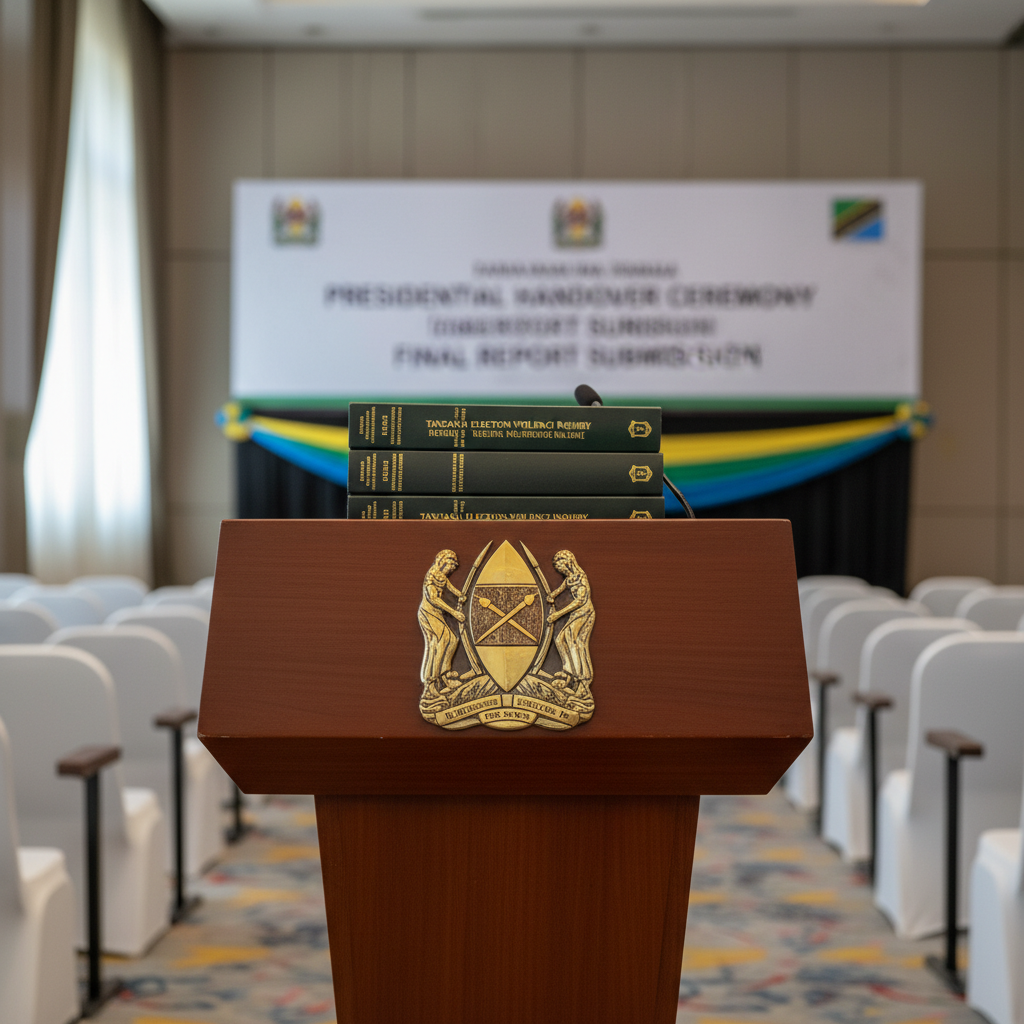
The presidential commission tasked with investigating the violence following Tanzania's October 2025 general elections is scheduled to deliver its final report to President Samia Suluhu Hassan on Thursday, April 23, 2026.
The presidential commission tasked with investigating the violence following Tanzania's October 2025 general elections is scheduled to deliver its final report to President Samia Suluhu Hassan on Thursday, April 23, 2026. The nine-member panel, chaired by retired Chief Justice Mohamed Chande Othman, concludes a 153-day probe that extended well beyond its initial 90-day mandate. The findings arrive amid ongoing international pressure and deep domestic divisions over the legitimacy of the process.
The Details
The commission's investigation was extensive, gathering evidence from 63,603 Tanzanians. This data includes 1,323 in-person testimonies, 553 sworn affidavits, and 4,891 anonymous questionnaires, alongside input from over 56,000 individuals via phone and SMS. Initially focused on six regions, the scope of the inquiry eventually expanded to cover 11 regions and 22 districts.
Launched by President Samia on November 20, 2025, the commission was mandated to identify the root causes of the violence, evaluate the demands of youth protesters, and examine the roles of NGOs and opposition parties. Crucially, the probe also looked into the methods employed by security forces during the unrest. Justice Othman defended the extended timeline, stating that the commission was 'guided only by evidence.'
However, the process has been marred by controversy. In January 2026, the commission barred media from witness sessions, a move condemned by civil society groups. The inclusion of former security officials on the panel also drew sharp criticism from the opposition. CHADEMA Vice Chairperson John Heche argued that 'the accused cannot be the judge in their own case,' echoing a sentiment shared by other opposition figures who view the domestic probe as fundamentally flawed.
These domestic tensions are mirrored by a lack of consensus on the scale of the tragedy. While the UN OHCHR reports that hundreds were killed, the opposition party CHADEMA claims the death toll exceeds 1,000. The government has yet to release its own official casualty figures, and reports from the UN suggest that security forces may have removed bodies from streets and hospitals to conceal evidence.
The violence in question coincided with the October 29, 2025, general elections, where youth-led protests were met with live ammunition from security forces. President Samia was declared the winner with 98% of the vote, a result the African Union claimed violated democratic values.
Context
Tanzania's 2025 general election triggered the country's most severe political crisis in decades. The process was characterized by a boycott from the main opposition party, CHADEMA, whose chairperson, Tundu Lissu, remains in detention. The electoral period also saw the imposition of an internet shutdown to stifle communication during the unrest.
International scrutiny has been intense. Tanzania was placed on the Commonwealth Ministerial Action Group (CMAG) Formal Agenda, leading to a visit in April 2026 by Commonwealth Special Envoy Dr. Lazarus Chakwera. Dr. Chakwera met with the commission and opposition leaders, emphasizing that lasting peace requires a 'commitment to truth and accountability.'
Further international engagement included a visit from a high-level delegation of the African Women Leaders Network (AWLN), featuring figures such as Ellen Johnson Sirleaf and Sahle-Work Zewde. These visits highlight the global concern over the crackdown on dissent and the subsequent handling of the victims' families, to whom President Samia previously extended her condolences in an address to parliament.
What's Next
The primary focus now shifts to President Samia's reaction to the report. While she previously argued for a domestic commission to operate before considering external inquiries, the legitimacy of the findings remains disputed. CHADEMA and ACT-Wazalendo have already rejected the commission, with chief legal counsel Rugemeleza Nshala declaring the body 'null and void' from its inception.
The Tanzanian government faces a critical test of accountability. The public and international community will be watching to see if the report leads to prosecutions of security personnel or the release of detained protesters, many of whom—including children—were charged with treason.
Additionally, the outcome of this inquiry may influence President Samia's promised constitutional reforms. Having pledged such reforms within the first 100 days of her new term, the president's handling of the violence report could serve as a bellwether for her commitment to democratic renewal and the reconciliation of the fragmented political landscape.
Never Miss a Signal
Get the latest breaking news and daily briefings from Zero Signal News directly to your inbox.