
Tesla Enters Eighth Week of Losses as JPMorgan Sets $145 Price Target
Zero Signal Staff
Published April 10, 2026 at 6:06 PM ET · 15 hours ago
Reddit r/technology
Tesla stock closed its eighth consecutive week in the red on April 10, 2026, after JPMorgan analyst Ryan Brinkman reiterated an "Underweight" rating with a $145 price target—implying 60% downside from current levels.
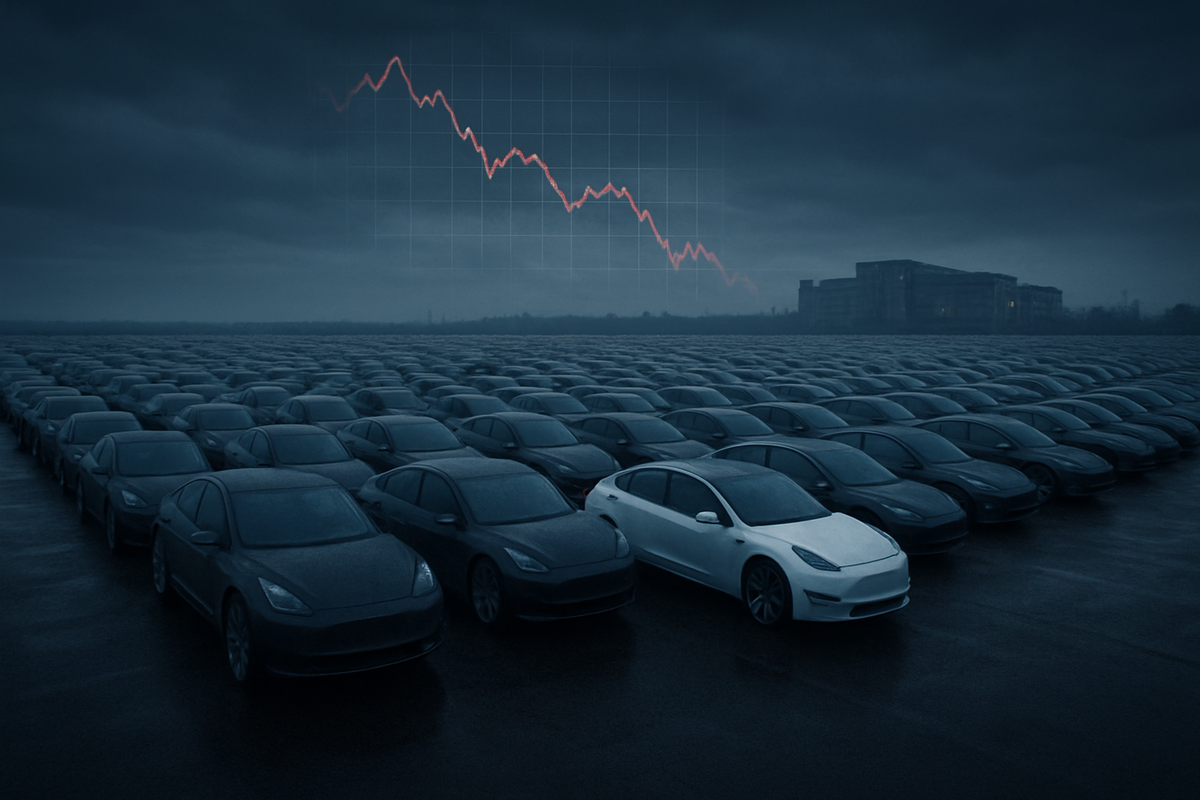
Tesla stock closed its eighth consecutive week in the red on April 10, 2026, after JPMorgan analyst Ryan Brinkman reiterated an "Underweight" rating with a $145 price target—implying 60% downside from current levels. The bearish call follows Tesla's report of a record 164,000 unsold vehicles globally and a production-delivery gap of 50,000 units in the first quarter alone.
Tesla manufactured 408,386 vehicles in Q1 2026 but delivered only 358,023, marking the company's widest production-over-delivery gap on record. The surplus has pushed global days of supply to over 30 days, up from the company's historical lean standard of 10 days. Stock price has declined approximately 25% since the start of 2026 and currently trades between $337 and $344.
Brinkman's research note identified a "fundamental disconnect" between Tesla's automotive performance and its stock valuation, citing what he characterized as speculative projects including robotaxi development and the Optimus humanoid robot. The analyst attributed the inventory buildup to weakening consumer demand for electric vehicles despite Tesla's price cuts.
The inventory crisis coincides with the expiration of the $7,500 federal EV tax credit in late 2025, which removed a key demand driver for Tesla vehicles. Industry observers on financial forums noted that the policy change has increased total cost of ownership for average buyers, with some commenters questioning whether Tesla's margins can sustain without government support.
Competitors are capturing market share during Tesla's downturn. BYD Co. Ltd. nearly doubled Tesla's Q1 output and now leads in over 20 international markets including Australia and Brazil. Rivian Automotive begins mass production of its R2 SUV this month at a $45,000 price point, positioning it to compete directly with Tesla's Model Y lineup.
Context
Tesla's current difficulties represent a reversal from its historical position as a growth company insulated from traditional automotive competition. For years, Tesla operated with minimal inventory and benefited from both government incentives and an absence of credible EV competitors. The company's valuation premium was built partly on these structural advantages, which have now eroded.
The broader EV market has cooled . Federal tax credit expiration removed a $7,500 purchase incentive that had sustained demand across the industry. Simultaneously, legacy automakers including Ford Motor Company and traditional Chinese manufacturers have launched competing electric and hybrid vehicles, fragmenting the market Tesla once dominated. BYD's rise to volume leadership marks a historic shift in the automotive industry's competitive hierarchy.
Tesla's inventory-to-sales ratio now mirrors challenges faced by legacy automakers during previous market downturns. A 30-day supply is considered elevated in the automotive industry; historical data shows that inventory levels above 60 days typically precede significant price reductions or production cuts.
What's Next
The critical metric to monitor is whether Tesla can reduce its 164,000-unit inventory without resorting to further price cuts that would compress margins. Management has indicated it may reconsider its aggressive expansion strategy given the high-interest-rate environment, but no specific production reduction targets have been announced as of April 10.
Rivian's R2 production launch this month will test whether Tesla's Model Y customer base can be persuaded to switch platforms. If Rivian captures meaningful sales volume in the coming quarters, it could validate JPMorgan's thesis that Tesla's premium valuation lacks fundamental support. The company's next earnings call and inventory report, expected in late April or early May 2026, will provide the first concrete data on whether the inventory glut is stabilizing or worsening.
Never Miss a Signal
Get the latest breaking news and daily briefings from Zero Signal News directly to your inbox.