
Thousands Join 'May Day Strong' Protests Across U.S. Demanding Worker Protections and Billionaire Taxes
Zero Signal Staff
Published May 2, 2026 at 12:29 AM ET · 163 days ago
The Guardian, TIME, NPR, The Hill, Fox News
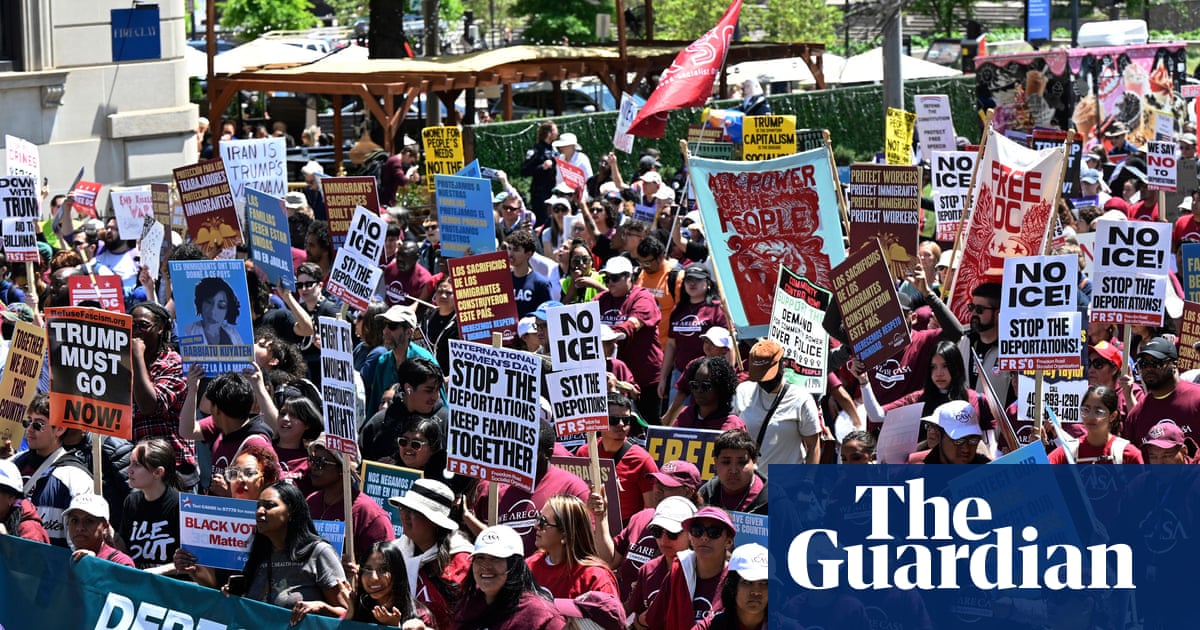
More than 500 events swept across the United States on May 1, 2026, as the 'May Day Strong' coalition mobilized under the banner 'Workers Over Billionaires,' calling for walkouts, school strikes, and a sweeping economic blackout that shuttered school
More than 500 events swept across the United States on May 1, 2026, as the 'May Day Strong' coalition mobilized under the banner 'Workers Over Billionaires,' calling for walkouts, school strikes, and a sweeping economic blackout that shuttered schools and drew arrests from New York to San Francisco.
The Details
The May Day Strong coalition — which includes the National Education Association, United Auto Workers, Chicago Teachers Union, SEIU, Communication Workers of America, Indivisible, the Sunrise Movement, Democratic Socialists of America, and immigrant rights groups — organized the nationwide day of action around a single directive: no school, no work, no shopping.
Organizers called for walkouts, marches, and rallies in more than 500 locations, with major demonstrations in New York City, Chicago, Los Angeles, San Francisco, Washington D.C., Boston, Raleigh, Minneapolis, and Portland. Their demands included taxing the ultra-wealthy, expanding democracy, ending war, and abolishing Immigration and Customs Enforcement.
In New York City, marchers departed Bryant Park in Manhattan and proceeded toward a penthouse owned by Amazon founder Jeff Bezos before later gathering outside the company's New York offices. A subsequent march reached the New York Stock Exchange, where multiple protesters were arrested after chaining themselves to barriers. Mayor Zohran Mamdani addressed a crowd at Washington Square Park.
"Time and again, New York City workers have shaped history from where we stand right now," Mamdani said. "Workers have won the rights that are taken for granted today. The 40-hour work week. The weekend. Overtime pay."
In Chicago, thousands gathered at Union Park before a downtown march. In Los Angeles, a rally at MacArthur Park gave way to a three-mile march to Grand Park. At San Francisco International Airport, hundreds of airport workers protested, and multiple city officials were arrested after blocking traffic.
In Portland, activists occupied a Hilton hotel, leading to arrests. In Minneapolis, six protesters were taken into custody after blocking a bridge.
The Sunrise Movement said more than 100,000 students were expected to miss school. In North Carolina, at least 22 public school districts closed outright due to teacher absences for a 'Kids Over Corporations' march in Raleigh — an event organizers described as potentially one of the largest labor actions in the state's history.
Sanshray Kukutla, a student organizer with the Purdue University Sunrise Movement chapter, described the purpose of the action: "We're taking collective action to send a message to the billionaire class: it's our labor, our spending and our participation that keeps the whole system running, and if we don't work, they don't have profits."
Stacy Davis Gates, president of both the Chicago Teachers Union and the Illinois Federation of Teachers, framed the protests in terms of tax policy. "Not taxing the ultra-rich leaves schools without teachers, libraries without books, unsafe bridges, shuttered hospitals, and the rest of us paying more," she said. "We want a different future where students and communities have what they need."
Shayne Clegg of the Missouri Workers Center, speaking with NPR from St. Louis, said: "Workers in this country are fed up. We're tired. We're facing a lot of issues from this current authoritarian regime that we are under. Billionaires are getting all of the control."
Context
May Day, also known as International Workers' Day, traces its U.S. origins to the 1886 Haymarket Affair in Chicago, when a bomb detonated during a labor rally for an eight-hour workday and police opened fire, killing multiple officers and civilians.
The May Day Strong events follow earlier 2026 demonstrations under the 'No Kings' banner, including economic blackouts in Minnesota and other states following the fatal shooting of two U.S. citizens by federal immigration officers in Minneapolis.
Leah Greenberg, co-founder of Indivisible, described the economic blackout as a 'structure test' for the movement. "We are asking people to take a step into further exerting their power in all aspects of their lives — as workers, as students, as members of local organizing hubs," Greenberg said. "It's important as it builds muscles towards greater non-cooperation."
UAW President Shawn Fain has called for unions to align their contract expirations toward a general strike on May 1, 2028. Existing U.S. labor law effectively outlaws general strikes under the 1947 Taft-Hartley Act.
President Trump followed a line of predecessors going back to President Eisenhower by declaring May 1 'Loyalty Day,' designating it a time to celebrate loyalty to individual liberties. The White House also issued a statement defending the Trump administration's record on workers.
What's Next
Education Secretary Linda McMahon condemned Chicago's civic day of action as a 'dereliction of duty.' UAW President Shawn Fain has set a longer-term target of aligning union contract expirations for a potential general strike on May 1, 2028.
Never Miss a Signal
Get the latest breaking news and daily briefings from Zero Signal News directly to your inbox.