
Three Killed, Dozens Quarantined After Rare Hantavirus Outbreak on Antarctic Cruise
Zero Signal Staff
Published May 11, 2026 at 3:10 PM ET · 154 days ago
BBC News
A suspected outbreak of Andes-strain hantavirus aboard the expedition cruise ship MV Hondius has left three passengers dead and at least six others infected, prompting a multi-national scramble to evacuate and quarantine travelers.
A suspected outbreak of Andes-strain hantavirus aboard the expedition cruise ship MV Hondius has left three passengers dead and at least six others infected, prompting a multi-national scramble to evacuate and quarantine travelers. The World Health Organization on Monday confirmed eight cases linked to the vessel, six of them fully laboratory-confirmed, while stressing that the risk to the broader public remains low. The incident has drawn unusual global attention because the outbreak unfolded in remote Antarctic waters during a wildlife expedition.
The Details
The outbreak emerged while the ship was visiting remote wildlife areas where rodent-borne viruses are a known environmental hazard. Among the three fatalities are a Dutch couple. The husband died aboard the MV Hondius on 11 April, according to reports from the vessel. His wife disembarked at St Helena on 24 April as her condition worsened. Dutch carrier KLM later confirmed that she boarded a flight bound for Amsterdam in Johannesburg on 25 April but was denied onward travel due to the severity of her medical condition; she did not survive.
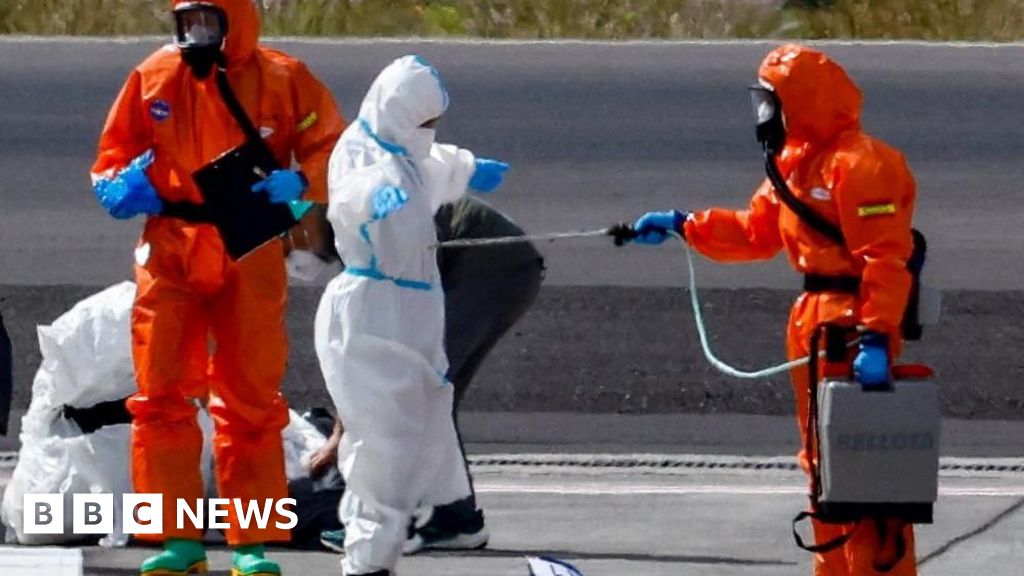
Authorities in multiple countries have launched coordinated repatriation and quarantine operations. Passengers are being flown to their home countries under strict medical supervision, with some requiring specialized transport because of health status or exposure risk. Twenty British nationals evacuated from the ship are isolating at Arrowe Park Hospital in Merseyside for an initial 72-hour observation period, followed by 42 days of monitored home self-isolation. Fourteen Spanish nationals are undergoing mandatory quarantine at a military hospital in Madrid. A French passenger showed symptoms during repatriation, while one American passenger exhibited mild symptoms and another tested mildly positive for the Andes strain; both were transported in specialized biocontainment units to prevent any potential secondary transmission.
Context
Hantavirus is a family of viruses carried by rodents and found across parts of Europe, Africa, and Asia. Infection typically occurs when humans inhale air contaminated by rodent urine, droppings, or saliva—a risk that increases in remote or enclosed environments where rodent populations are present. The Andes strain involved in this outbreak is the only known hantavirus variant capable of spreading between humans, and public health officials emphasize that such transmission requires very close contact.
There is currently no widely available vaccine or specific antiviral treatment for hantavirus infection; medical care is entirely supportive and tailored to the symptoms presented. The incubation period usually ranges from two to four weeks, though longer delays between exposure and illness have been documented. The 42-day home isolation period imposed on British evacuees mirrors public health protocols designed to exceed the upper bounds of known incubation windows, ensuring that any latent infections emerge under monitored conditions rather than in community settings.
"This is not Covid, this is not influenza, it spreads very, very differently," said Dr Maria Van Kerkhove, a WHO infectious disease epidemiologist, distinguishing the outbreak from more easily transmitted respiratory pandemics.
Prof Robin May, chief scientific officer at the UK Health Security Agency, sought to reassure the domestic population. "All of the British evacuees were healthy and asymptomatic... the risk to those not directly linked to the cruise is extremely low indeed," he said.
What's Next
Health authorities in the United Kingdom, Spain, France, the Netherlands, and the United States are continuing to trace contacts across multiple flights and transit points. May described the effort as "quite a mammoth effort" and warned that the work would continue "for some time." Investigators have not yet established the exact origin of the outbreak aboard the MV Hondius, leaving unanswered whether the initial infections stemmed from direct rodent exposure or a rare human-to-human chain. Officials said passengers will remain under quarantine in their respective countries throughout the incubation period. With no vaccine or proven antiviral available, the immediate response depends almost entirely on isolation, contact tracing, and supportive care for those who develop symptoms. Public health agencies said they are sharing flight manifests and passenger movement data across borders to close gaps in the tracing network. The WHO said it is monitoring developments and will issue updated guidance as the investigation progresses.
Never Miss a Signal
Get the latest breaking news and daily briefings from Zero Signal News directly to your inbox.