
Titan Warns Gold-Buying Curbs Would Cause Only Brief Demand Slowdown in India
Zero Signal Staff
Published May 12, 2026 at 2:31 AM ET · 153 days ago
Bloomberg / Reuters / Times of India / Economic Times
Titan Chief Financial Officer Ashok Sonthalia said any government measures to curb gold purchases would likely cause only a temporary slowdown in demand for India's largest jewellery retailer, even after Prime Minister Narendra Modi urged Indians to
Titan Chief Financial Officer Ashok Sonthalia said any government measures to curb gold purchases would likely cause only a temporary slowdown in demand for India's largest jewellery retailer, even after Prime Minister Narendra Modi urged Indians to stop buying gold for at least a year to preserve the nation's foreign-exchange reserves.
The Details
Sonthalia told Bloomberg in an interview published on May 12 that there could be a temporary slowdown in demand if the government implemented any measures to curb gold-buying. His comments addressed investor concerns that followed Modi's public appeal for Indians to avoid buying gold for a year in the national interest, as the prime minister warned that surging imports were draining foreign-exchange reserves.
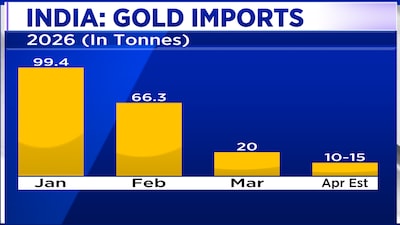
The scale of India's gold imports has expanded markedly in recent years. The Times of India reported that gold bar imports climbed from $36.5 billion in 2022 to $58.9 billion in 2025, citing data from the Global Trade Research Initiative. That increase of more than 60 percent over three years has amplified pressure on India's balance of payments and prompted Modi's unusual direct appeal to consumers.
Despite the political pressure and the prospect of regulatory curbs, Titan's recent business performance has demonstrated resilience in the face of elevated gold prices. The company posted high single-digit buyer growth and a 46 percent year-on-year advance in its domestic jewellery business, even as gold prices surged, Reuters reported on May 8 following the release of Titan's quarterly results. The report also noted that Titan missed quarterly profit estimates as costs bit into margins.
The company's growth ambitions remain substantial. Titan forecast 15 percent to 20 percent annual revenue growth over the next five years, Reuters reported on May 8, even as margin pressure from rising gold prices weighs on profitability. Titan Managing Director Ajoy Chawla said in the company's earnings briefing, "(Near term), 15% to 20% (revenue growth) is something that we ought to do. If we don't do that much, we won't be doing justice."
However, rising gold prices have already been affecting consumer behavior and forcing strategic shifts at Titan. In February, Titan said soaring gold prices were curbing customer growth and pushing the company to promote exchange programs and lower-carat jewelry, according to The Economic Times. The report noted that rising gold prices have pressured Indian jewellery demand broadly by shrinking the amount buyers can afford within fixed budgets.
Gold prices have been climbing globally, and Indian consumers have felt the effect acutely in a market where gold purchases are deeply embedded in cultural and ceremonial traditions. The tension between those traditions and the government's economic priorities has put India's jewellery sector in an unusually visible policy spotlight.
Context
Titan is India's top jeweller by sales, and its Tanishq chain is benefiting from a broader consumer shift toward branded jewellery retailers in a market historically dominated by fragmented local players. The company's position as the market leader means its outlook carries significant weight for the wider Indian jewellery sector, which is heavily dependent on gold demand driven by weddings, festivals, and investment purchases.
The government's concern about gold imports reflects the commodity's outsized role in India's trade balance. With imports reaching nearly $59 billion in 2025, gold represents one of the largest drains on India's foreign-exchange reserves outside of oil imports. Modi's appeal to avoid gold purchases for a full year marks a rare direct intervention by a sitting prime minister into consumer behavior, underscoring the seriousness of the economic pressure on the nation's external finances.
Investor concern over a possible demand hit from Modi's appeal led to a sell-off in Indian jewellery stocks including Titan, The Times of India reported. The market reaction highlights how closely tied Titan's valuation is to perceptions of regulatory risk and consumer sentiment around gold buying. Investors had already been watching the company closely after it missed quarterly profit estimates amid rising costs.
What's Next
Titan has indicated it will continue pursuing its 15 percent to 20 percent annual revenue growth target over the next five years despite the headwinds. The company is already promoting exchange programs and lower-carat jewelry as strategies to manage the impact of elevated gold prices on customer growth, according to its earlier statements in February.
Whether the government translates Modi's appeal into concrete curbs on gold purchases remains unclear. Sonthalia's assessment that any demand slowdown would be temporary suggests Titan's leadership believes the underlying drivers of gold consumption in India—cultural, ceremonial, and investment-related—would ultimately prove resilient even in the face of policy restrictions. The company's recent 46 percent year-on-year advance in domestic jewellery business supports that view, though continued price pressure and any formal regulatory action could test Titan's ability to sustain its growth trajectory.
The jewellery sector will be watching closely for any formal policy announcements following Modi's public appeal. In the meantime, Titan's focus on exchange programs and lower-carat offerings appears designed to keep price-sensitive customers within its ecosystem even if government action or sustained high prices put additional pressure on discretionary gold purchases. Chawla's stated ambition of 15 percent to 20 percent revenue growth suggests the company expects to navigate the turbulence without abandoning its long-term expansion targets.
Never Miss a Signal
Get the latest breaking news and daily briefings from Zero Signal News directly to your inbox.