
Tropical Rainforest Loss Fell 36% in 2025, but Wildfire Damage Is Surging Worldwide
Zero Signal Staff
Published April 29, 2026 at 10:27 AM ET · 150 days ago
World Resources Institute / University of Maryland GLAD Lab via Global Forest Watch
Tropical primary rainforest loss dropped 36% in 2025 from the record high set the year before, according to University of Maryland GLAD Lab data published through the World Resources Institute's Global Forest Watch platform — but fires now account fo
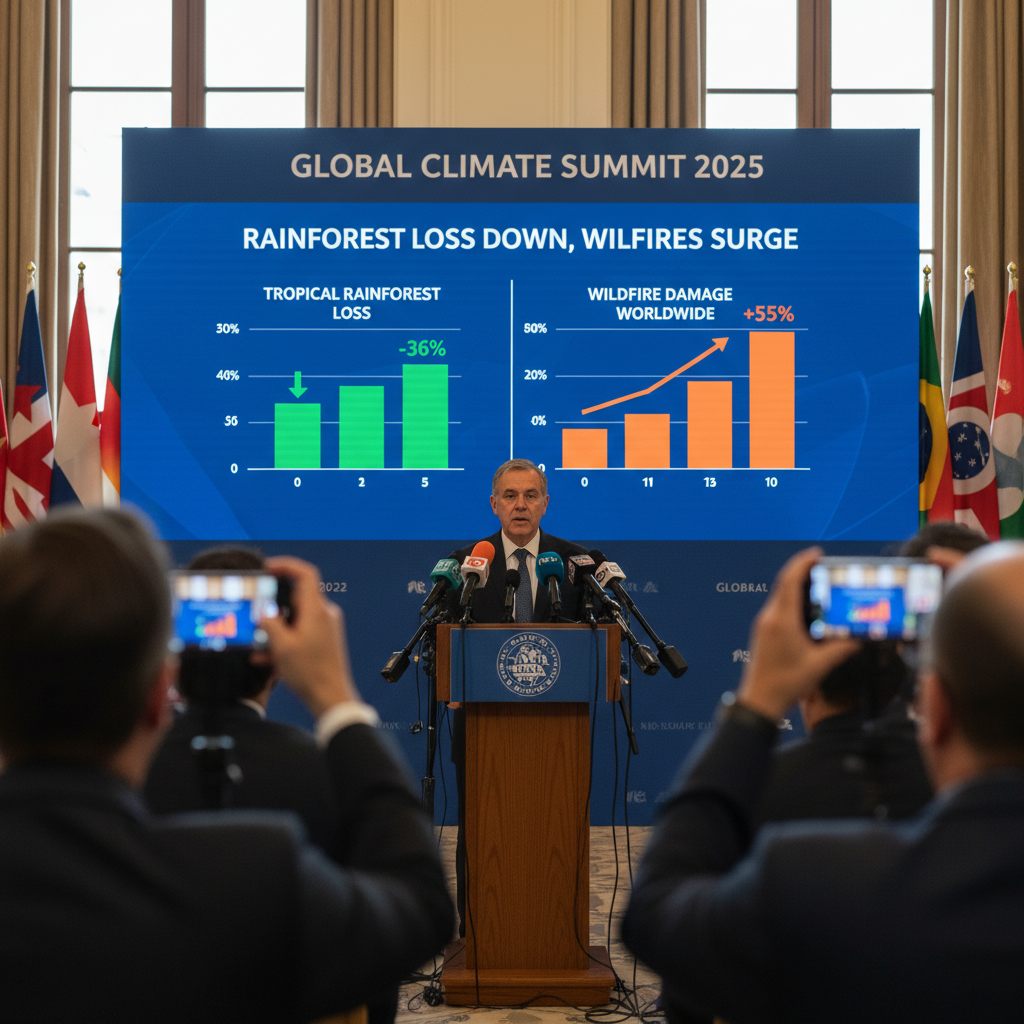
Tropical primary rainforest loss dropped 36% in 2025 from the record high set the year before, according to University of Maryland GLAD Lab data published through the World Resources Institute's Global Forest Watch platform — but fires now account for nearly half of all tree cover loss worldwide, threatening to undercut the hard-won progress.
The Details
The world still lost 4.3 million hectares of tropical primary rainforest in 2025, an area roughly the size of Denmark, according to the WRI's Global Forest Review. That figure remains 46% higher than a decade ago, underscoring how far the world is from reversing long-term deforestation trends even as a single-year improvement registers.
Fires drove the most alarming trend in this year's data. According to the World Resources Institute, fires accounted for 42% of the 25.5 million hectares of total tree cover lost globally in 2025. Canada bore the largest national fire burden, recording 5.3 million hectares burned — its second-worst fire year on record, the WRI reported.
Brazil was the standout driver of the improvement. Non-fire primary forest loss in Brazil fell 41% compared to 2024, reaching the country's lowest level on record, according to the WRI and the Global Forest Review. The WRI attributed the decline to stronger enforcement and anti-deforestation policies.
"A drop of this scale in a single year is encouraging — it shows what decisive government action can achieve," said Elizabeth Goldman of the World Resources Institute. "But part of the decline reflects a lull after an extreme fire year. Fires and climate change are feeding off each other, and with El Niño on the horizon for 2026, investments in prevention and response will be critical as extreme fire conditions become the norm."
Matthew Hansen, whose University of Maryland GLAD Lab produced the underlying satellite data, pointed to structural drivers behind the fire trend. "Climate change and land clearing have shortened the fuse on global forest fires," Hansen said in the WRI release. "They are turning seasonal disturbances into a near-permanent state of emergency."
The WRI also flagged a data-reliability caveat: some fire-related loss recorded in 2025 may actually reflect late-season 2024 fires detected with a delay because smoke and haze obstructed satellite observation, according to the Global Forest Review's deeper analysis. The figures will be refined as satellite coverage improves.
Context
The 2025 findings land against the backdrop of a major international commitment that is falling far short of its targets. More than 140 countries signed the Glasgow Leaders' Declaration pledging to halt and reverse forest loss by 2030. According to the World Resources Institute, current loss levels are still roughly 70% too high to meet that goal.
WRI's wildfire analysis adds further context to the fire risk: repeated, more intense fires can overwhelm even forests that evolved alongside fire, while tropical rainforests like the Amazon are especially vulnerable because they are not naturally fire-adapted, the WRI wildfire explainer notes. Once a fire-naive tropical forest burns repeatedly, its capacity to recover narrows with each cycle.
The NYT reported, citing data aligned with the WRI findings, that global tree loss fell approximately 14% in 2025 year over year, with the decline largely driven by improved protection of tropical forests. That figure is based on reporting that draws on the same underlying WRI and University of Maryland data.
What's Next
With WRI researchers flagging El Niño conditions as a potential accelerant heading into 2026, the organization's Goldman said investments in wildfire prevention and rapid-response capacity will be critical. No specific international policy deadlines or scheduled multilateral reviews are identified in the current WRI release.
The Glasgow 2030 deforestation pledge remains the primary international benchmark against which annual forest-loss data will continue to be measured. With current trajectories still well above the target threshold, the 2025 data is likely to factor into upcoming climate and biodiversity negotiations.
Never Miss a Signal
Get the latest breaking news and daily briefings from Zero Signal News directly to your inbox.