
Trump Administration Considers $500 Million Rescue Loan for Spirit Airlines
Zero Signal Staff
Published April 22, 2026 at 3:35 PM ET · 157 days ago
New York Times / CNBC / Reuters / CBS News
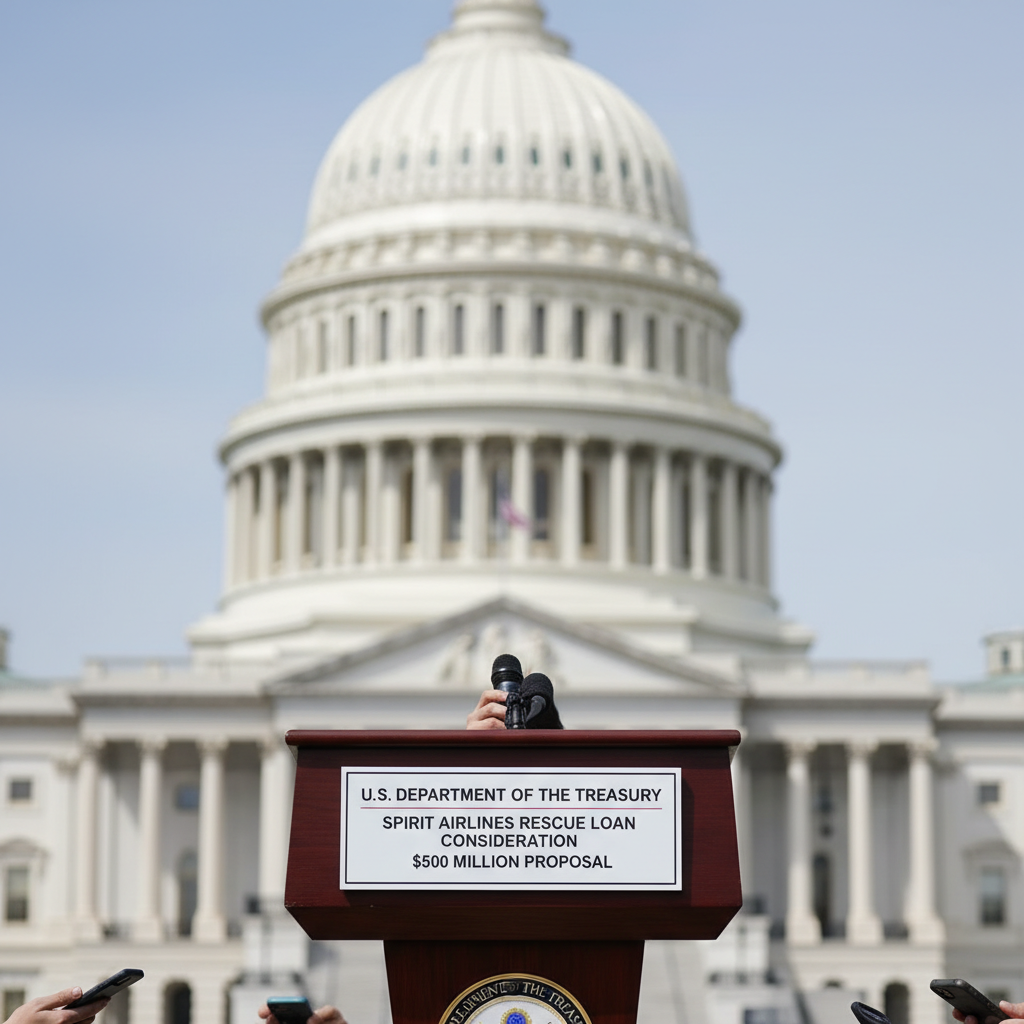
The Trump administration is in advanced negotiations to provide Spirit Airlines with a rescue loan of up to $500 million to prevent the carrier's collapse. The proposed deal would grant the U.S.
The Trump administration is in advanced negotiations to provide Spirit Airlines with a rescue loan of up to $500 million to prevent the carrier's collapse. The proposed deal would grant the U.S. government a senior claim over other creditors and include warrants that could allow the federal government to take an ownership stake of up to 90%. The move comes as the airline faces its second Chapter 11 bankruptcy in two years.
The Details
The negotiations, first reported by the Wall Street Journal, center on a high-stakes financial lifeline for the Florida-based carrier. Under the terms currently being discussed, the federal government would secure a priority position in the repayment hierarchy, ensuring its loan is paid before other debts. The inclusion of ownership warrants suggests the administration is prepared for a scenario where the government becomes the primary owner of the airline if the company cannot repay the debt.
President Donald Trump signaled his support for the intervention during an April 22 interview on CNBC's 'Squawk Box,' stating that the government should help the airline to protect approximately 14,000 jobs. Commerce Secretary Howard Lutnick has emerged as a primary proponent of the plan, specifically pushing for the administration to secure a significant ownership stake in the company.
However, the proposal has met with internal resistance. Transportation Secretary Sean Duffy expressed skepticism in interviews with Reuters, questioning whether the bailout would merely 'forestall the inevitable' for a company that has struggled to find profitability. Duffy asked why the government should purchase a company that other private buyers have avoided.
Spirit's financial instability has been exacerbated by a series of systemic shocks. The airline has not reported a profit since 2019 and entered its current bankruptcy proceedings in August 2025. A critical blow came in early 2026 when jet fuel prices nearly doubled—rising from an assumed $2.24 per gallon to approximately $4.24 per gallon—following U.S.-Israel strikes on Iran and the subsequent disruption of oil flows through the Strait of Hormuz.
To survive, Spirit had planned a drastic restructuring, intending to shrink its fleet to between 76 and 80 aircraft by the third quarter of 2026. This would represent only about one-third of its pre-bankruptcy size. Without the federal loan, sources told CNBC that the airline may have faced imminent liquidation.
Context
Spirit Airlines has long been embroiled in a struggle for survival, plagued by rising operational costs and shifting consumer preferences. The airline's trajectory was fundamentally altered in January 2024 when a federal judge blocked a $3.8 billion merger with JetBlue on antitrust grounds. The Biden administration's Justice Department supported that decision, a move that current White House spokesperson Kush Desai claims left Spirit on precarious financial footing.
The potential bailout is highly unusual for the modern era. Typically, the U.S. government provides aviation relief through broad, industry-wide programs, such as those seen after the September 11 attacks or during the COVID-19 pandemic. Propping up a single specific carrier raises questions about the legal authority for such a move and the precedent it sets for the industry.
Industry analysts warn that a government rescue could distort market competition. J.P. Morgan analysts suggested that if Spirit is saved, other struggling carriers like Frontier or JetBlue might seek similar aid. United Airlines CEO Scott Kirby has openly opposed the rescue, arguing that Spirit's low-cost business model is fundamentally flawed and that well-managed airlines remain profitable without federal intervention.
What's Next
The administration must now determine the exact legal mechanism it will use to authorize the loan. If the deal is finalized, the government will need to establish a framework for managing its potential 90% ownership stake and a timeline for the airline's return to profitability.
Labor unions are closely watching the developments. The Association of Flight Attendants-CWA has urged the government to recognize the need for emergency funds to avoid mass unemployment and the loss of consumer choice in the air travel market.
Economists are also monitoring the potential impact on airfares. Data suggests that when ultra-low-cost carriers exit a market, fares often rise sharply. A failure to rescue Spirit could lead to significant price increases for passengers on routes previously served by the airline, similar to the 50% fare hikes seen on some Delta routes after Spirit's previous exits.
Never Miss a Signal
Get the latest breaking news and daily briefings from Zero Signal News directly to your inbox.