
Trump Characterizes Iran Conflict as 'Little Diversion,' Predicts Imminent End
Zero Signal Staff
Published April 17, 2026 at 1:28 AM ET · 1 day ago
Al Jazeera, CNBC, Politico, USA Today
President Donald Trump described the ongoing war with Iran as a 'little diversion' during an April 16 event in Las Vegas.
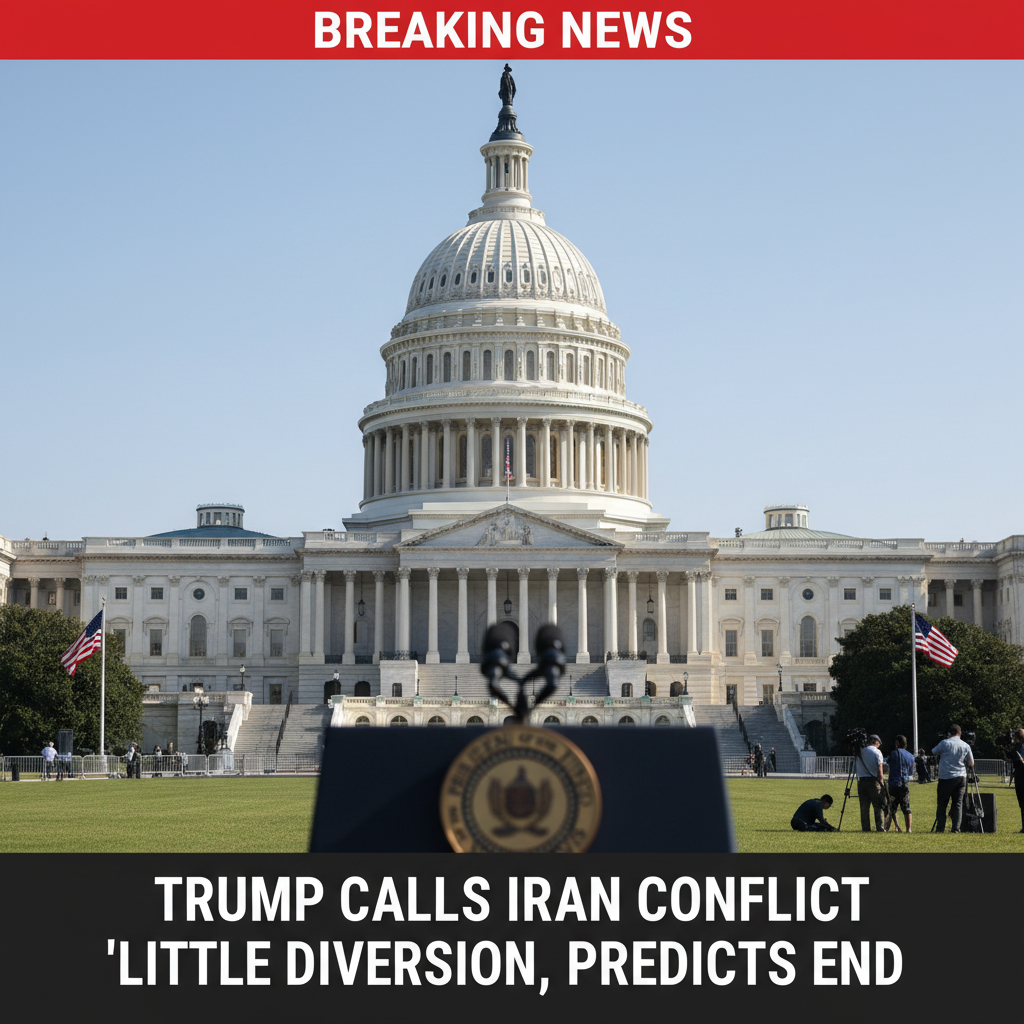
President Donald Trump described the ongoing war with Iran as a 'little diversion' during an April 16 event in Las Vegas. While promoting a domestic tax policy, Trump asserted that the conflict is 'going along swimmingly' and is expected to conclude shortly. The remarks come as the U.S. continues to negotiate a complex off-ramp from a conflict that has already resulted in more than 2,000 deaths.
The Details
Speaking at the AC Hotel Las Vegas Symphony Park, President Trump downplayed the severity of the military campaign, stating, 'The war in Iran is going along swimmingly. It should be ending pretty soon.' He further praised the U.S. military's capabilities, claiming the campaign was 'perfect' and reflecting the power of the most powerful military in the world.\n\nThe President's confidence comes amid a strategic push to force Iran back to the negotiating table. The U.S. has maintained a blockade in the Strait of Hormuz, while Iran has restricted freighter traffic through the region for several weeks. Trump indicated that Iran is eager to reach a deal, stating that the administration is 'dealing very nicely' with Tehran.\n\nHowever, a critical point of contention remains regarding nuclear assets. Trump claimed that Iran has agreed to return 'nuclear dust' located underground. This assertion has not been corroborated by Iranian officials or independent sources, and reports suggest Tehran continues to refuse to surrender its partially enriched uranium.\n\nAlongside these comments, the President announced a temporary ceasefire between Israel and Lebanon. He also indicated that a second round of direct, face-to-face negotiations with Iranian representatives could occur as early as the coming weekend.\n\nThe event in Las Vegas was primarily intended to promote the administration's 'No Tax on Tips' policy, though the President pivoted frequently to discuss the geopolitical situation in the Middle East.
Context
The U.S.-led conflict with Iran began on February 28, 2026, and has now spanned approximately seven weeks. The war has had significant global economic repercussions, most notably in the energy sector. Disruptions in the Strait of Hormuz have pushed national average gas prices above $4 per gallon, with Nevada prices climbing nearly to $5 per gallon.\n\nDiplomatically, the U.S. has proposed a 14-point peace plan. A central pillar of this proposal is a 20-year moratorium on Iran's ability to enrich uranium. In response, Iran has offered only a five-year stoppage and has resisted demands to relinquish its current stock of enriched material.\n\nInternational observers have questioned the President's optimistic outlook. Finnish President Alex Stubb, speaking in Washington earlier this week, suggested that Iran currently 'holds a lot of the cards,' challenging the administration's narrative of total control. Additionally, analysts have noted that the conflict has provided a substantial financial windfall for Russia due to the resulting surge in global oil prices.
What's Next
The immediate focus shifts to the coming weekend, where a second round of face-to-face negotiations with Iran may take place. The outcome of these talks will likely depend on whether the U.S. can secure a longer-term commitment to nuclear disarmament than the five-year window currently offered by Tehran.\n\nDomestically, the administration faces the challenge of stabilizing energy prices. With gas costs rising and a significant portion of the Nevada electorate expressing disapproval of the President, the economic impact of the blockade in the Strait of Hormuz remains a volatile political issue.\n\nObservers will also be monitoring the stability of the parallel ceasefire between Israel and Lebanon. Iran has already expressed dissatisfaction with continued Israeli strikes in Lebanon, suggesting that any broader peace agreement with Tehran remains fragile.
Never Miss a Signal
Get the latest breaking news and daily briefings from Zero Signal News directly to your inbox.