
Trump Defies War Powers Deadline on Iran, Claiming Past Presidents Did the Same
Zero Signal Staff
Published May 1, 2026 at 11:36 PM ET · 163 days ago
BBC News / CNN
President Donald Trump refused to seek congressional authorization for the war against Iran on Friday, May 1, 2026, as the 60-day deadline under the 1973 War Powers Resolution expired, arguing that past presidents routinely ignored the law and callin
President Donald Trump refused to seek congressional authorization for the war against Iran on Friday, May 1, 2026, as the 60-day deadline under the 1973 War Powers Resolution expired, arguing that past presidents routinely ignored the law and calling it 'totally unconstitutional.' The administration's position has drawn criticism from legal scholars and even some Republican senators, as Washington and Tehran remain deadlocked over key disputes with no clear end to the conflict in sight.
The Details
The 60-day deadline required under the War Powers Resolution — the point at which a president must obtain congressional authorization or withdraw U.S. forces — passed on Friday after the Trump administration notified Congress of military strikes against Iran approximately 60 days prior, according to BBC News. The exact notification date is in minor dispute between reporting outlets, with BBC News citing February 28, 2026, and CNN reporting March 2, 2026, though both agree the deadline has now been reached.
Trump addressed the issue directly when asked whether he would seek congressional approval. "So many presidents, as you know, have gone and exceeded it. It's never been used. It's never been adhered to. Nobody's ever asked for it before," Trump said, according to BBC News.
The administration has also advanced a separate legal argument. Defense Secretary Pete Hegseth, testifying before senators, said the current ceasefire with Iran alters the legal clock. "We are in a ceasefire right now, which our understanding means the 60-day clock pauses or stops," Hegseth said, according to CNN.
Legal scholars have pushed back on both arguments. David Schultz, a professor of political science and legal studies at Hamline University, told BBC News that the historical precedent cited by Trump does not validate his current position. "Just because other presidents haven't invoked it doesn't mean that what Trump is doing here is correct. Here, Trump has basically committed us to combat without any support from Congress," Schultz said.
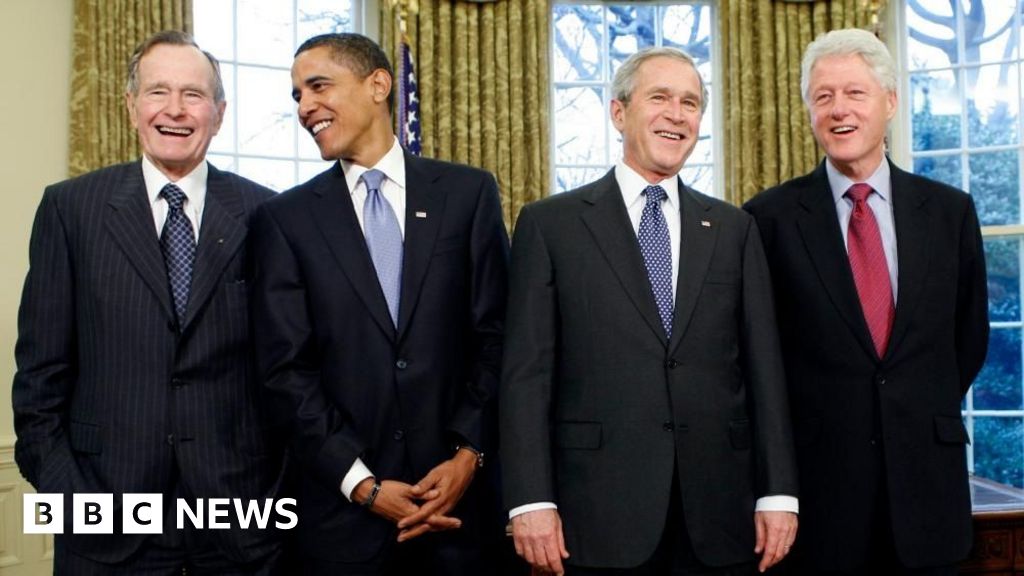
The historical record Trump invoked is, in fact, mixed. According to BBC News, President Ronald Reagan received congressional approval to deploy U.S. Marines in Lebanon within the 60-day window in 1983. President George H.W. Bush sought congressional authorization before launching Operation Desert Storm in 1991, though he argued it was not legally required. President George W. Bush won congressional approval for wars in both Afghanistan in 2001 and Iraq in 2003, BBC News reported.
The cases that more closely parallel Trump's current position are those of Presidents Bill Clinton and Barack Obama. Clinton's 1999 bombing campaign in Kosovo exceeded the 60-day limit and lasted 78 days without congressional authorization, according to BBC News. Obama argued in 2011 that the U.S. military campaign in Libya did not qualify as "hostilities" under the War Powers Resolution and continued past the deadline without congressional approval; that NATO-led intervention lasted more than seven months, BBC News reported.
Vice President JD Vance articulated the administration's broader view in remarks he made in January 2026, before the Iran war began. "The War Powers Act is fundamentally a fake and unconstitutional law. It's not going to change anything about how we conduct foreign policy," Vance said, according to CNN.
Context
The 1973 War Powers Resolution was enacted specifically to constrain executive war-making power, passed in the shadow of the Vietnam War to limit President Richard Nixon's ability to continue waging that conflict without congressional approval. Nixon vetoed the bill; Congress overrode his veto, according to BBC News and CNN.
Multiple presidents — including Trump, Obama, and others — have argued the law is unconstitutional, according to CNN. Courts have consistently declined to rule on its constitutionality, and the law has never been successfully used to end a military action, CNN reported. That track record has allowed successive administrations to treat the 60-day limit as a political pressure point rather than an enforceable legal constraint.
Even so, congressional dissent has grown as the deadline passed. Sen. Susan Collins, a Republican from Maine, stated that "the 60-day deadline is not a suggestion; it is a requirement," according to CNN, and changed her position to vote alongside Democrats in an unsuccessful attempt to remove U.S. armed forces from hostilities in Iran. Democratic efforts to revoke Trump's war powers for Iran have failed in Congress, with one previous resolution blocked by Vice President JD Vance's tie-breaking vote, CNN reported.
Sen. John Curtis said he "will not support continued funding for the use of force without Congress weighing in" and has discussed a war authorization with colleagues including Sen. Lisa Murkowski, according to CNN.
What's Next
Washington and Tehran remain deadlocked over control of the Strait of Hormuz and Iran's nuclear program, leaving the Trump administration's exit strategy from the conflict unclear, according to BBC News. With the 60-day deadline now passed and the ceasefire cited by Hegseth providing no resolution to the underlying legal dispute, pressure on Congress to act — either by authorizing the war or forcing a withdrawal — is likely to intensify.
Sen. Curtis's stated intention to withhold support for continued funding absent a congressional vote, and ongoing discussions among Republican senators about a formal war authorization, suggest the debate over the conflict's legal basis will continue in the weeks ahead, according to CNN.
Never Miss a Signal
Get the latest breaking news and daily briefings from Zero Signal News directly to your inbox.