
Trump Rejects Iran Counteroffer, Says Ceasefire Has '1% Chance of Living'
Zero Signal Staff
Published May 12, 2026 at 2:30 AM ET · 154 days ago
BBC News
President Donald Trump declared on May 11 that the U.S.-Iran ceasefire was on 'massive life support,' comparing its survival odds to a patient with a 1 percent chance of living, after Tehran submitted a counterproposal that the president rejected out
President Donald Trump declared on May 11 that the U.S.-Iran ceasefire was on 'massive life support,' comparing its survival odds to a patient with a 1 percent chance of living, after Tehran submitted a counterproposal that the president rejected outright as 'TOTALLY UNACCEPTABLE.'
The Details
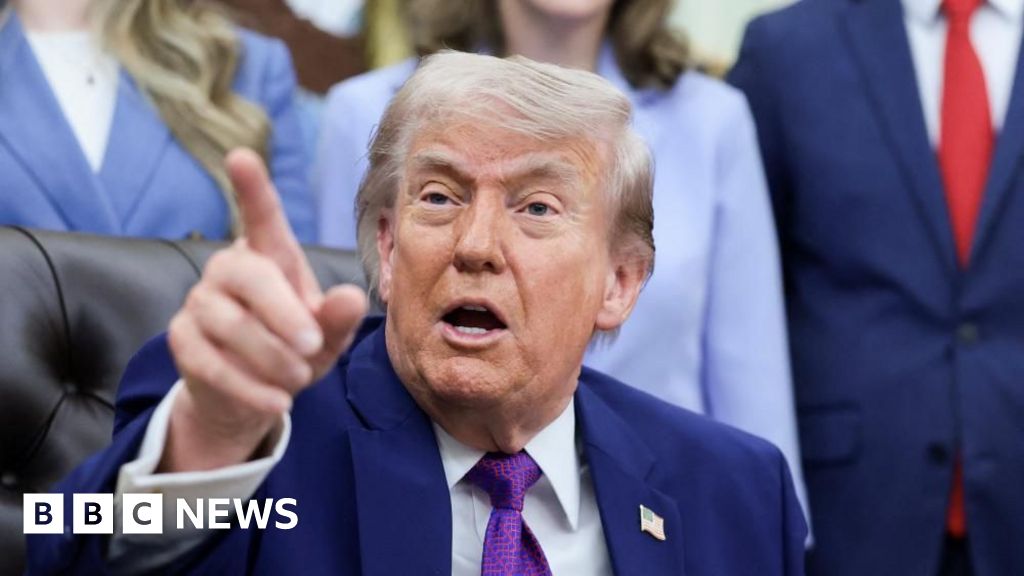
Speaking in the Oval Office on May 11, Trump said the ceasefire between the United States and Iran had deteriorated sharply following Tehran's latest response to a U.S. peace framework. 'I would say the ceasefire is on massive life support... when the doctor walks in and says, “Sir, your loved one has approximately a 1 percent chance of living,”' Trump said, according to BBC News. He also posted on Truth Social that Iran's response was 'TOTALLY UNACCEPTABLE.'
Reuters reported that the two sides remained far apart on key issues after Iran submitted its counteroffer. According to Reuters, Iran's proposal included demands to end the war on all fronts, halt the U.S. naval blockade, guarantee no further attacks, lift sanctions, and recognize Iranian sovereignty over the Strait of Hormuz. The breadth of Tehran's demands underscored the distance between the parties.
In response to Trump's public dismissal, Iran's parliamentary speaker Mohammad Ghalibaf posted on X that Iran's armed forces were 'ready to respond and to teach a lesson for any aggression,' BBC News reported. The statement signaled that Tehran would not retreat from its demands under public pressure from Washington.
Axios previously reported that the initial U.S. framework under discussion involved a moratorium on Iranian nuclear enrichment, sanctions relief, and restoring transit through the Strait of Hormuz. The reported structure suggested Washington sought a broader normalization in exchange for de-escalation, but the current breakdown indicates the two sides have not converged on terms. Reuters separately confirmed that the U.S. and Iranian positions remain widely separated.
Context
The ceasefire between the United States and Iran had largely held since April despite occasional exchanges of fire, according to BBC News. The truce has carried significant economic weight because the Strait of Hormuz typically handles about 20 percent of global oil and liquefied natural gas flows, making any breakdown in the ceasefire consequential beyond the battlefield. Disruptions to transit through the strait would affect global energy markets and supply chains.
AP News described the two countries as being at an impasse ahead of Trump's trip to China, reinforcing that negotiations had stalled as the ceasefire weakened. The timing of Trump's remarks, delivered publicly before his departure, raised the stakes of the diplomatic deadlock.
The public exchange between Trump and Ghalibaf marks a departure from the relative quiet that had characterized the ceasefire period since April. Both leaders chose public channels—Truth Social and X—to air their positions, making the disagreement visible rather than confined to back-channel discussions. This public framing reduces flexibility for either side to moderate its stance without appearing to back down.
The Axios report on the initial U.S. framework provides context for what Washington had sought earlier in the process: a moratorium on Iranian nuclear enrichment alongside sanctions relief and restored transit through the Strait of Hormuz. Iran's counterproposal, as reported by Reuters, diverged sharply from that framework by demanding an end to the war on all fronts, a halt to the naval blockade, guarantees against further attacks, sanctions relief, and recognition of Iranian sovereignty over the strait.
What's Next
With the ceasefire described by Trump as having a 1 percent chance of survival, the immediate path forward is unclear. Iran has publicly reaffirmed its readiness to respond to aggression, while the White House has rejected Tehran's counterproposal without indicating what terms might be acceptable. The economic significance of the Strait of Hormuz means that any breakdown in the truce could affect global energy flows.
Trump's upcoming trip to China comes as the U.S.-Iran impasse remains unresolved. AP News reported that the two countries are at an impasse ahead of that trip, suggesting the deadlock will persist at least through the immediate diplomatic window. Whether the stalemate can be addressed through third-party diplomacy or direct negotiation is not yet apparent from public statements by either side. Both governments have anchored themselves to public positions, leaving limited visible room for compromise. The occasional exchanges of fire that have persisted since April could escalate if the ceasefire collapses entirely.
Never Miss a Signal
Get the latest breaking news and daily briefings from Zero Signal News directly to your inbox.