
Trump Threatens Bombing as U.S.-Iran Ceasefire Deadline Looms
Zero Signal Staff
Published April 20, 2026 at 9:42 PM ET · 159 days ago
Multiple Sources (PBS, Reuters, CNBC, NYT)
President Donald Trump has warned that 'lots of bombs start going off' if the current ceasefire with Iran expires Tuesday evening without a deal. The threat comes as a high-level U.S.
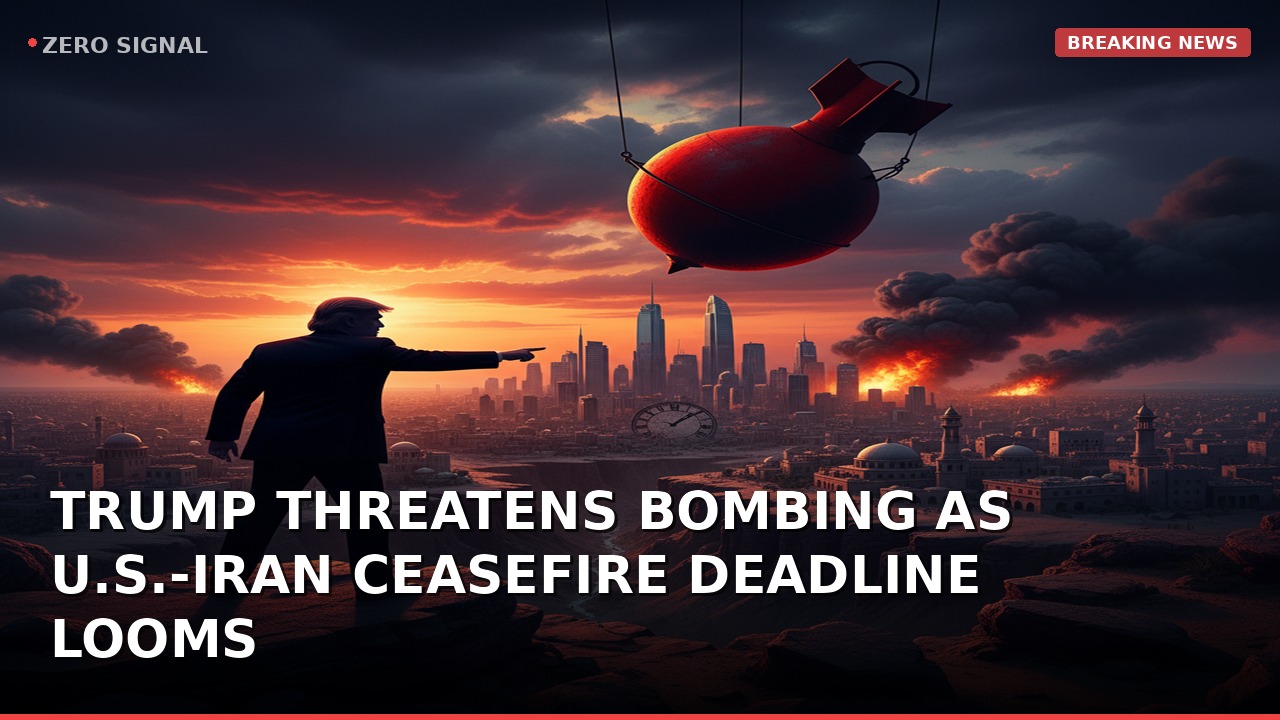
President Donald Trump has warned that 'lots of bombs start going off' if the current ceasefire with Iran expires Tuesday evening without a deal. The threat comes as a high-level U.S. delegation prepares for a second round of peace talks in Islamabad, amid conflicting reports on whether Tehran will attend.
The Details
Speaking with PBS News on Monday, April 20, President Trump stated that the expiration of the two-week ceasefire on Tuesday evening would lead to immediate military action. In a separate interaction with Fox News on Sunday, the President intensified the rhetoric, claiming that 'the whole country is going to get blown up' if a deal is not reached, specifically noting that Iranian bridges and power plants would be targeted.
A U.S. delegation, including Vice President JD Vance and special envoys Steve Witkoff and Jared Kushner, is traveling to Islamabad for negotiations. While President Trump described the group as an 'A-team,' the prospects for a breakthrough remain uncertain. Iran's Foreign Ministry officially stated Monday that there are no plans to attend the talks, citing 'Washington's excessive demands' and an ongoing naval blockade. However, the New York Times reported that senior Iranian officials are still making plans to send a delegation to Islamabad on Tuesday.
Tensions have escalated on the water. On April 19-20, the U.S. Navy seized the Touska, an Iran-flagged cargo ship in the Gulf of Oman, after the crew ignored six hours of warnings. The USS Spruance fired on the vessel's engine room before U.S. Marines boarded. This follows a broader U.S. naval blockade of Iranian ports near the Strait of Hormuz, which Trump claims is costing Iran $500 million per day.
In response, Iran has closed the Strait of Hormuz, a critical artery for 20% of global crude oil and natural gas. Iranian Parliamentary Speaker Mohammad Bagher Ghalibaf defended the move, stating it is impossible for other vessels to pass through the strait while Iranian ships are blocked from their own ports.
President Trump has maintained a hard line on nuclear capabilities, telling PBS News that 'Iran cannot have a nuclear weapon.' He also demanded the full reopening of the Strait of Hormuz and stated that any new agreement would be 'far better' than the Obama-era nuclear deal, which he scrapped during his first term.
Context
The current conflict began on February 28, 2026, with U.S. and Israeli airstrikes on Iranian targets. In the seven weeks since, the war has claimed more than 5,000 lives across nearly a dozen countries, including over 1,600 Iranian civilians.
The existing two-week ceasefire was brokered on April 7 with the assistance of Pakistani Prime Minister Shehbaz Sharif. That agreement came less than two hours before a previous deadline, during which Trump had warned that 'a whole civilization will die.'
Domestic pressure on the U.S. administration is mounting. Polls indicate that most Americans oppose the war, and the President's approval ratings have hit record lows as the closure of the Strait of Hormuz drives up global oil prices and gasoline costs for U.S. consumers.
What's Next
The immediate focus rests on the Tuesday evening deadline. If the Islamabad talks fail or if Iran refuses to participate, the U.S. has signaled a return to large-scale aerial bombardments of Iranian infrastructure.
Iran continues to demand the release of frozen assets, war reparations, and a regional ceasefire before committing to long-term terms. A U.S. official has already denied that frozen assets would be released as part of any agreement.
Global energy markets are expected to remain volatile. Should the ceasefire expire and the Strait of Hormuz remain closed, oil prices are likely to surge further, compounding the economic pressure on the White House.
Never Miss a Signal
Get the latest breaking news and daily briefings from Zero Signal News directly to your inbox.