
Trump Welcomed With Military Honors in Beijing as Xi Warns Taiwan Could Bring Conflict
Zero Signal Staff
Published May 14, 2026 at 9:57 AM ET · 151 days ago
BBC News
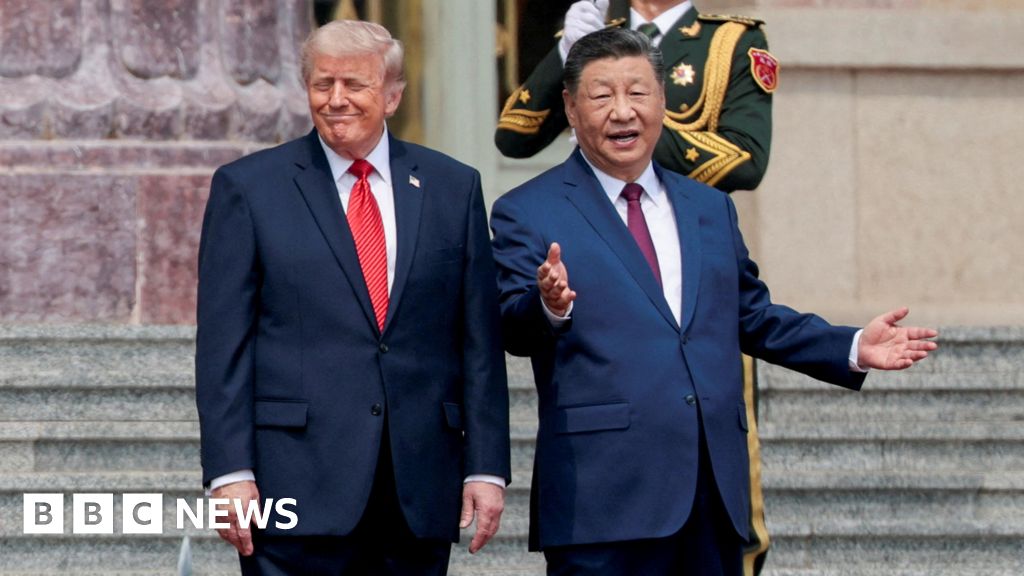
Chinese President Xi Jinping welcomed Donald Trump to Beijing with a full military honor guard, a gun salute and a state banquet at the Great Hall of the People.
Chinese President Xi Jinping welcomed Donald Trump to Beijing with a full military honor guard, a gun salute and a state banquet at the Great Hall of the People. The ceremony represented one of the most elaborate displays of state hospitality accorded to a visiting American leader. The gun salute and military honor guard formed part of the ceremonial program that greeted Trump upon arrival. The state banquet capped a day of formal protocol. The event also provided striking public presentation of cordiality between the two presidents. The display of cordiality stood in contrast to the tariff disputes that have shaped the economic relationship. Behind the fanfare, however, three major disputes dominated the agenda. Trade, Iran and Taiwan shaped the substance of the high-stakes summit. The warm reception and the difficult policy conversations created a visible tension throughout the visit. Trump arrived accompanied by major U.S. business leaders, signaling the commercial weight of the engagement.
The Details
During the visit, Trump praised Xi directly. "You're a great leader. I say it to everybody," he told the Chinese president. He described the talks as a cherished opportunity. The remarks reinforced the personal rapport that has marked their past interactions. The exchange stood in contrast to the policy friction that defined the closed-door discussions.
Chinese state media reported that Xi warned Trump the issue of Taiwan could bring the two countries into conflict if mishandled. The warning highlighted Beijing's position on Taiwan. It also signaled that the topic remains a volatile element in the bilateral relationship. No formal agreements on Taiwan were announced during the summit.
On trade, the White House said both sides discussed expanding U.S. firms' access to the Chinese market. The conversation occurred within a fragile tariff truce. Both countries had imposed tariffs above 100 percent on each other last year. The temporary pause remains in place. Neither side announced new trade agreements during the visit. The lack of concrete outcomes on trade left the existing tariff structure untouched.
Iran featured prominently in the talks. The White House said both leaders agreed that Iran must never have a nuclear weapon. They further agreed that the Strait of Hormuz must remain open to support the free flow of energy. The White House statement summarized these positions as shared outcomes from the discussions. The energy security agreement emerged as one of the clearer points of convergence between the two sides.
Trump traveled to Beijing with major U.S. business leaders. His delegation included Tesla CEO Elon Musk, Apple CEO Tim Cook and Nvidia CEO Jensen Huang. Their presence underscored the commercial focus of the trip. It also highlighted the technology and manufacturing interests invested in the engagement. The inclusion of such prominent executives reflected the economic stakes attached to the conversations between the two governments.
Context
Trump's visit marked his first trip to China since 2017. During his first term as president, he traveled to Beijing and received an unusually lavish reception from Xi. The current visit follows that same pattern of elaborate ceremony. Xi has maintained the practice of extending grand state welcomes to Trump across both of his terms in office. That earlier meeting established a precedent for grand state welcomes that Xi repeated this week.
The summit takes place after a fragile tariff truce. The United States and China imposed tariffs above 100 percent on each other last year. The truce has held, but no permanent resolution has replaced it. The economic tension continues to shape the bilateral environment. Businesses in both countries remain exposed to the uncertainty created by the high tariff levels.
China has worked to position itself as a stable power. Beijing has expanded its leverage in manufacturing, rare earths and advanced technology. That strategy reflects an effort to project reliability internationally even as it manages sharp disagreements with Washington.
What's Next
The White House outlined broad areas of agreement on Iran and market access. It did not specify implementation steps or timelines. The shared position that Iran must never acquire a nuclear weapon and that the Strait of Hormuz must remain open stood as the clearest public outcomes from the discussions. How those commitments translate into policy remains to be seen.
No formal agreements emerged on Taiwan. Xi's warning that the issue could bring the two countries into conflict if mishandled remained the only public statement on the matter from the summit. The topic was left unresolved. Both sides acknowledged the risk without announcing a framework for managing it.
The fragile tariff truce remains in effect. The talks produced no breakthrough on trade rules or tariff reductions. American business leaders who accompanied Trump will be watching whether the discussions on expanding U.S. firms' access to the Chinese market produce concrete changes. Without specific commitments, the pause in hostilities may remain just that—a pause.
Never Miss a Signal
Get the latest breaking news and daily briefings from Zero Signal News directly to your inbox.