
Ukraine Deploys Thousands of Combat Robots to Reduce Soldier Casualties From Drones
Zero Signal Staff
Published April 15, 2026 at 12:14 PM ET · 184 days ago
Ars Technica
Ukraine has dramatically increased its use of armed ground robots on the battlefield, conducting over 9,000 robotic missions in March 2026 alone as a strategy to protect soldiers from the expanding drone threat.
Ukraine has dramatically increased its use of armed ground robots on the battlefield, conducting over 9,000 robotic missions in March 2026 alone as a strategy to protect soldiers from the expanding drone threat. President Volodymyr Zelenskyy claimed that Ukrainian robots and drones forced a Russian military position to surrender in a recent operation, though the claim remains unverified. The shift reflects how both sides of the war are turning to unmanned systems to operate in a kill zone that now extends 12 miles beyond frontline positions.
Ukraine's defense ministry reported a threefold increase in uncrewed ground vehicle missions over the five months preceding March 2026. Zelenskyy stated in a promotional video that military robots completed over 22,000 missions in the preceding three months. The robots are equipped with machine guns, grenade launchers, and in some cases explosives, and are used for supply runs, medical evacuations, and direct combat roles.
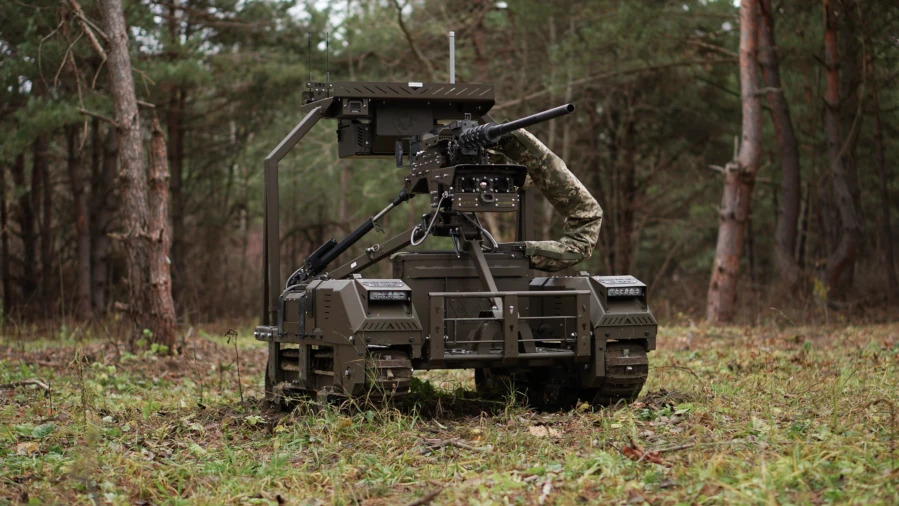
One example is the Droid TW 12.7, a tracked robot developed by Ukrainian company DevDroid and armed with an M2 Browning machine gun on a remotely controlled turret. The robot can travel at speeds up to 15 miles per hour and communicates with operators via radio and Starlink satellite service. A deputy battalion commander of Ukraine's 38th Marine Brigade told The Kyiv Independent that robots attempting to evacuate wounded soldiers succeeded in only one out of five attempts due to terrain damage and other complications.
The expanded robot deployment responds to the lethal conditions created by persistent drone surveillance and strikes. Drones now inflict the majority of battlefield casualties on both sides as the full-scale war enters its fifth year. Ukraine's military has increased robot deployment to reduce human exposure to drone threats, though ground robot missions remain far fewer than drone sorties—thousands per month versus hundreds of thousands monthly.
Context
Drone warfare has altered the battlefield calculus since Russia's 2022 invasion. By February 2026, drone surveillance and strike capabilities had created a 12-mile kill zone beyond frontline positions, forcing soldiers to move only at night or under conditions of reduced visibility. The shift toward unmanned systems reflects a broader trend in modern conflict: as detection and targeting technology improves, commanders seek to remove personnel from direct exposure.
Russia has similarly increased its robotic deployment over the winter of 2025-2026, indicating both militaries view ground robots as essential to future operations. However, robots face the same vulnerabilities as drones—they can be destroyed by enemy fire and lose communication during electronic warfare or signal jamming. The Ukrainian 3rd Separate Assault Brigade previously documented using flying drones and ground robots together to attack Russian fortified positions in Kharkiv Oblast, with the brigade claiming Russian soldiers surrendered to one of its robots after their position was overrun.
What's Next
Ukraine's robot surge will likely accelerate as drone casualties continue to mount. The military is testing autonomous and AI-powered drones that can track and strike targets without constant operator control, suggesting future ground robots may similarly incorporate autonomous capabilities to operate independently during communication blackouts. The success rate of robotic evacuation missions—currently one in five—will determine whether the strategy meaningfully reduces soldier casualties or remains a supplementary tool. As both Ukraine and Russia expand robotic deployment, the war will increasingly demonstrate which unmanned systems prove most effective in sustained combat, potentially influencing military procurement decisions globally.
Never Miss a Signal
Get the latest breaking news and daily briefings from Zero Signal News directly to your inbox.