
UN Report: Average of 47 Women and Girls Killed Daily in Gaza War
Zero Signal Staff
Published April 17, 2026 at 11:35 AM ET · 1 day ago
UN Women / Reuters
More than 38,000 women and girls were killed in Gaza between October 2023 and December 2025, according to a report published by UN Women on April 17, 2026.
More than 38,000 women and girls were killed in Gaza between October 2023 and December 2025, according to a report published by UN Women on April 17, 2026. The findings indicate that an average of at least 47 women and girls died every day throughout the 27-month period. UN officials describe the death toll as disproportionately high compared to previous conflicts in the region.
The Details
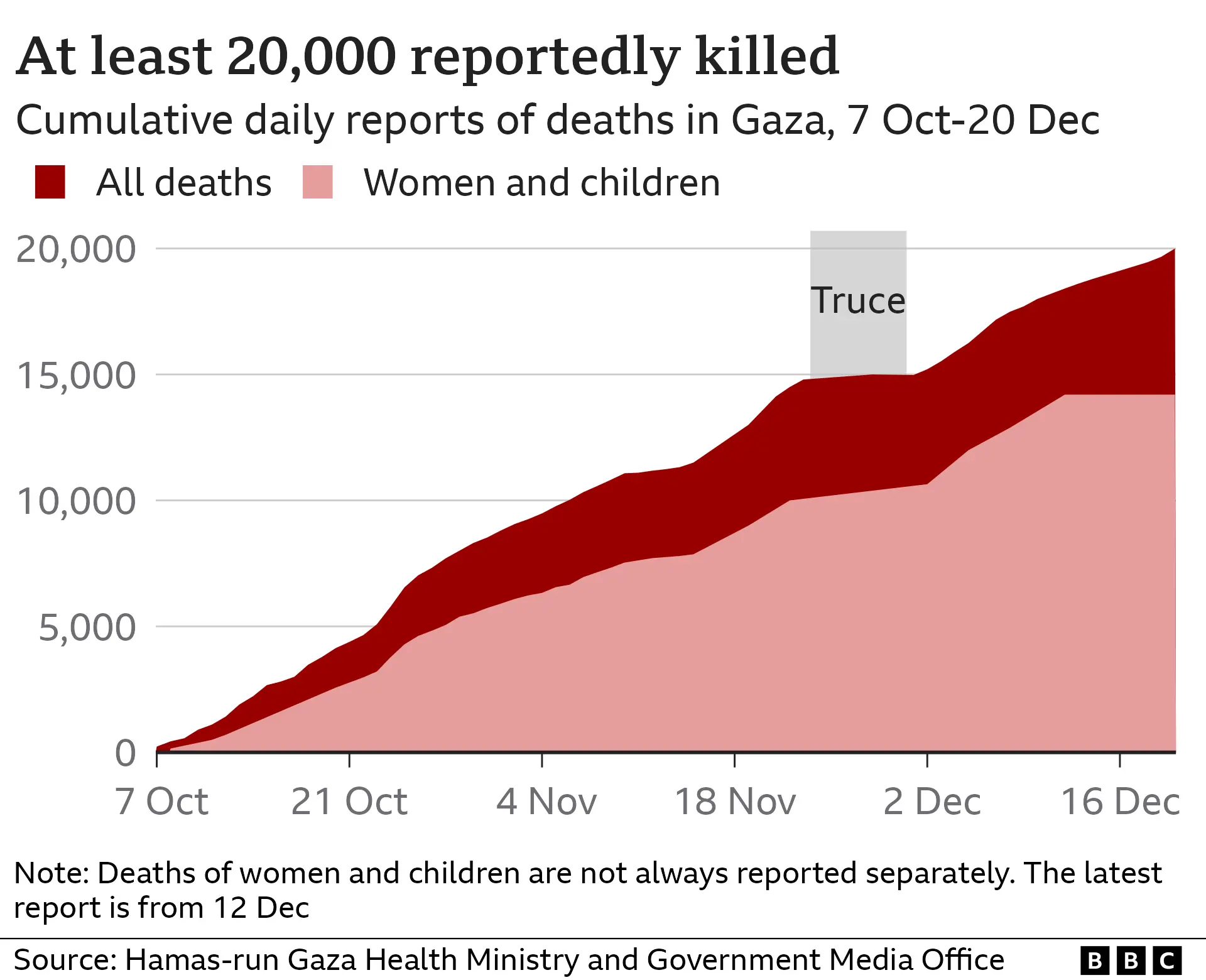
The UN Women report breaks down the total casualties to include over 22,000 women and more than 16,000 girls. This data comes during a period where overall fatalities in Gaza exceeded 71,200, though health officials warn this is likely a conservative estimate due to the systemic collapse of reporting and health information infrastructure.
Sofia Calltorp, UN Women's Chief of Humanitarian Action, emphasized during a Geneva briefing that the proportion of women and girls among the dead is far higher than in earlier Gaza conflicts, where they accounted for 15% of fatalities in 2008-2009 and 22% in 2014. Calltorp noted that these figures represent individuals with their own lives and dreams, rather than mere statistics.
Beyond the death toll, the humanitarian crisis has severely impacted the living conditions of survivors. Approximately one million women and girls remain displaced. The World Health Organization reports that over 500,000 women lack access to essential health services, including critical antenatal and postnatal care, due to the extensive damage to medical infrastructure.
Moez Doraid, UN Women Regional Director for the Arab States, stated that the war has fundamentally reshaped the family structure in Gaza. Tens of thousands of households are now headed by women, who must navigate extreme economic hardship and heightened security risks while bearing the total burden of caregiving.
Despite a ceasefire enacted in October 2025, the security situation remains volatile. Local medics report that more than 750 Palestinians have been killed since the ceasefire began, while UN briefings cite a figure of over 730. UN Women expressed deep concern that the killing of women and girls has continued past the ceasefire, though the lack of gender-disaggregated data makes precise counting difficult.
Context
The conflict, which saw two years of full-scale warfare, ended in an October 2025 ceasefire. However, the agreement left a complex territorial reality: Israeli troops maintain control over a depopulated zone comprising more than half of the Gaza Strip, while Hamas retains power in the remaining narrow coastal area. Both sides have traded accusations of ceasefire violations, with four Israeli soldiers killed since the truce.
Earlier estimates from May 2025 had placed the death toll of women and girls at over 28,000. The rise to 38,000 by December 2025 indicates that approximately 10,000 women and girls died during the most intense latter stages of the war. This escalating casualty rate underscores the increasing volatility of the conflict's final phases.
External analysis suggests the actual scale of the tragedy may be even larger. In February 2025, The Lancet reported that fatalities in Gaza were likely underreported by approximately 41 percent, accounting for both direct combat deaths and excess deaths resulting from the breakdown of health systems.
What's Next
The immediate focus for humanitarian agencies is the survival of the most vulnerable populations. UN Women projects that approximately 37,000 pregnant and breastfeeding women will require treatment for acute malnutrition in the year following the ceasefire.
Moez Doraid has called for a ceasefire in full effect, demanding total compliance with terms, respect for international law, and strengthened accountability. He emphasized that unimpeded humanitarian assistance at scale is the only way to protect the remaining women and girls in the region.
International monitors continue to track ceasefire violations as Israel maintains its objective of thwarting attacks by Hamas and other militant factions. The long-term recovery of Gaza's health infrastructure remains a critical hurdle for the half-million women currently without basic medical care.
Never Miss a Signal
Get the latest breaking news and daily briefings from Zero Signal News directly to your inbox.