
UN Warns South Sudan Faces Potential Full-Scale Famine and State Collapse
Zero Signal Staff
Published April 17, 2026 at 9:33 PM ET · 182 days ago
AP News
The United Nations has warned the Security Council that South Sudan is at risk of slipping into a full-scale famine and total collapse.
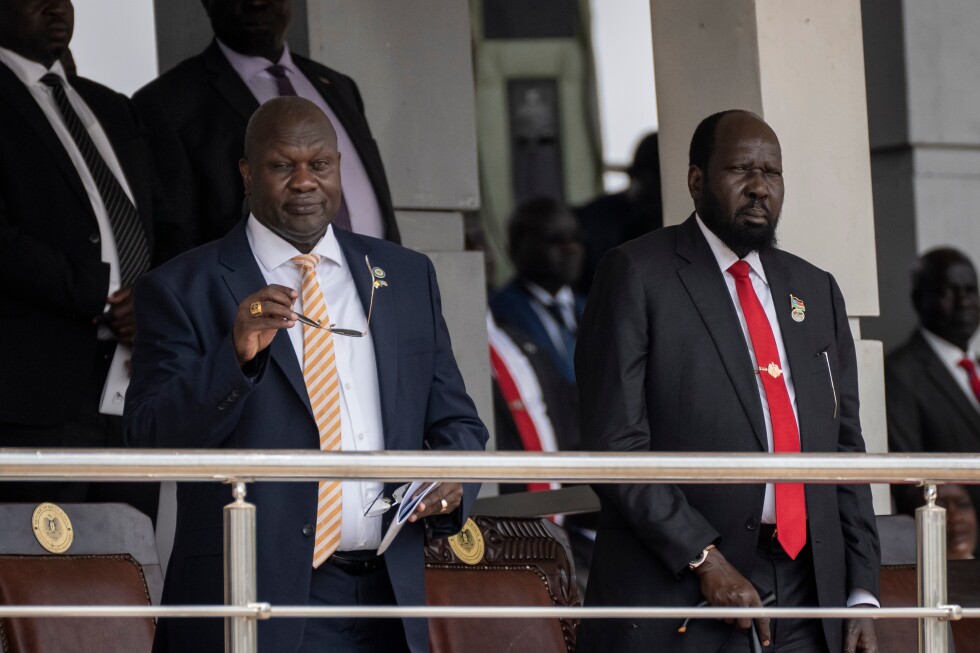
The United Nations has warned the Security Council that South Sudan is at risk of slipping into a full-scale famine and total collapse. UN Emergency Relief Coordinator Tom Fletcher issued the warning as fighting intensifies between government forces and opposition groups. The crisis is compounded by planned reductions in UN peacekeeping presence and a global humanitarian emergency.
The Details
UN Under-Secretary-General for Humanitarian Affairs and Emergency Relief Coordinator Tom Fletcher informed the UN Security Council that the nation's instability has reached a critical tipping point. The warning comes as armed conflict escalates between the South Sudanese government and opposition forces led by detained Vice President Riek Machar. The stability of the region has been precarious since a 2018 peace agreement collapsed approximately one year ago, reigniting systemic violence.
On the ground, the military situation is deteriorating rapidly. The South Sudanese army recently issued evacuation orders in Akobo, a key opposition stronghold near the Ethiopian border, to facilitate a planned military operation. Thousands of civilians have fled the town, further straining an already broken humanitarian landscape.
Simultaneously, the international community's footprint in the region is shrinking. The UN Mission in South Sudan (UNMISS) is implementing budget-driven cutbacks, which include the planned closure of its base in Akobo. This withdrawal occurs despite worsening humanitarian conditions and desperate calls for a cessation of hostilities. UNMISS spokesperson Priyanka Chowdhury stated that the mission is engaging with all parties at all levels to prevent further escalation and restore calm.
The human cost of the conflict is severe. A survey by the Norwegian Refugee Council indicates that nearly all displaced households in South Sudan are regularly skipping meals. The lack of food security is exacerbated by the closure of key bases and the ongoing military displacement of populations from their farmland.
This crisis is not occurring in isolation. South Sudan is inextricably linked to the catastrophe in neighboring Sudan, which is currently in its fourth year of civil war between the Sudanese Armed Forces and the Rapid Support Forces. Together, the two nations comprise the world's largest humanitarian crisis, with 33.7 million people requiring assistance in 2026.
Context
South Sudan achieved independence from Sudan in 2011, but its brief period of sovereignty was quickly marred by internal strife. A brutal civil war from 2013 to 2018 pitted President Salva Kiir against Riek Machar, ending in a power-sharing agreement. However, the failure of that agreement in early-to-mid 2025 returned the country to a state of active conflict.
The broader regional instability is further fueled by the ongoing war in Sudan, which has created massive cross-border displacement and economic disruption. The flow of refugees and the breakdown of trade routes have stripped South Sudan of essential resources.
Global economic pressures have also played a role. Tom Fletcher has previously noted that the US-Israeli war on Iran has driven up global fuel and fertilizer prices. These macroeconomic factors have severely hampered agricultural production across East Africa, making famine more likely in regions already devastated by war.
Fletcher has been increasingly critical of the international response to the region. At a Berlin donor conference on April 15, 2026, he described Sudan as an 'atrocities laboratory,' citing the use of sieges, the denial of food, and weaponized sexual violence as tools of war.
What's Next
The immediate focus of the international community remains the potential for a total state collapse in South Sudan. The upcoming military operations in Akobo and other opposition strongholds could trigger a new wave of mass displacement and accelerate the slide toward famine if humanitarian corridors are not maintained.
Diplomatic efforts will likely center on whether the UN Security Council can persuade the warring parties to return to the peace process or establish a durable ceasefire. However, with the UNMISS peacekeeping footprint shrinking due to budget cuts, the UN's ability to monitor ceasefire agreements or protect civilians is significantly diminished.
In the coming months, the scale of the food crisis will depend heavily on the international community's willingness to increase humanitarian funding. Without a massive infusion of aid and a cessation of hostilities, the 'full-scale famine' warned of by Fletcher may become an inevitability for millions of displaced South Sudanese.
Never Miss a Signal
Get the latest breaking news and daily briefings from Zero Signal News directly to your inbox.