
U.S. Foreign Aid Cuts Erode American Soft Power, Scholars Say
Zero Signal Staff
Published April 10, 2026 at 12:13 AM ET · 1 day ago
NPR Health
As the Trump administration reduces foreign aid spending, scholars and policymakers are debating whether the United States is surrendering its ability to influence global opinion through cultural and diplomatic appeal rather than military or...
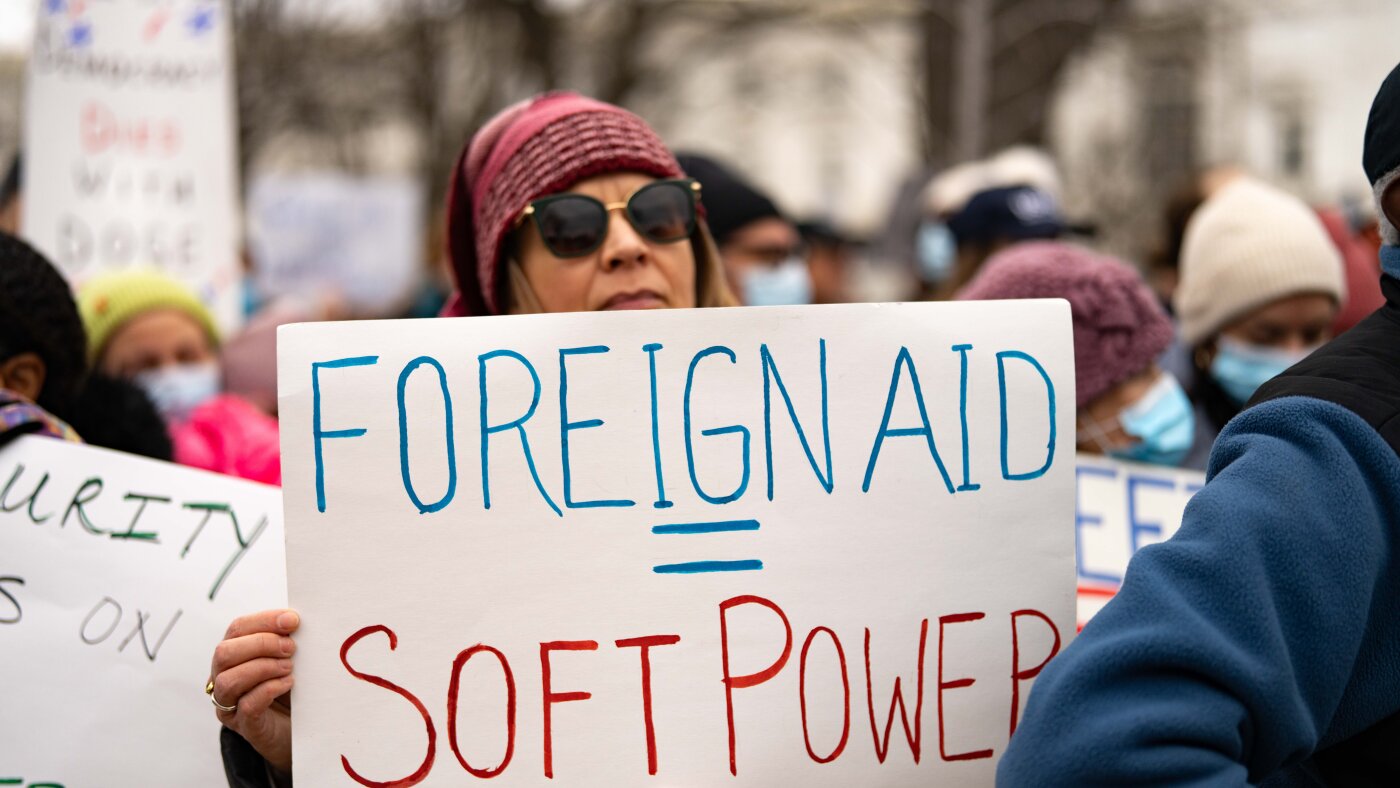
As the Trump administration reduces foreign aid spending, scholars and policymakers are debating whether the United States is surrendering its ability to influence global opinion through cultural and diplomatic appeal rather than military or economic coercion. Senator Dick Durbin accused the administration in February 2025 of "recklessly gutting American soft power and providing a huge strategic opening to China," while supporters of the cuts argue the shift prioritizes more direct forms of influence.
Soft power, a term popularized by political scientist Joseph Nye in his 1990 book "Bound to Lead," refers to the ability to achieve desired outcomes through attraction rather than force or payment. The concept has become central to debates over U.S. foreign policy as the administration dismantles USAID and withdraws from international organizations.
According to David Haigh, CEO of Brandfinance, which surveys 175,000 people globally annually to measure soft power, American influence has declined across multiple metrics in the past year—from perceived friendliness to commitment to shared goals like climate action. Haigh attributed the decline to the administration's shift toward hard power and economic leverage. "I think it's probably because there is an impatience to get results. And one of the things about soft power is you can't be impatient," Haigh said.
Samuel Brazys, who studies soft power and international development at University College Dublin, pointed to migration patterns as an indicator of declining U.S. appeal. "My impression is that soft power was people from all over the world wanting to move to the United States," Brazys said. "I think a good gauge that we've seen is that people are starting to have more reservations about moving to the United States." He noted that residents of Global South countries increasingly view China as an alternative destination, suggesting a shift in how nations perceive the two powers.
Brazys witnessed soft power in action while living in Micronesia, when a Chinese embassy-sponsored acrobat troupe performed at a local college—an event he described as the largest entertainment offering the community had experienced in years. "It was 100% soft power at work, and certainly won the hearts and minds of the audience in the moment," he said.
Context
The concept of soft power emerged during the Cold War but gained prominence in the 1990s as the United States sought to maintain global influence after the Soviet Union's collapse. Foreign aid became a primary tool—the U.S. government viewed aid disbursement as a mechanism to build international goodwill and align nations with American interests and values.
China's rise as a global competitor has intensified focus on soft power strategies. Over the past 15 years, China has systematically deployed cultural exchanges, infrastructure investments, and aid programs in Africa, Southeast Asia, and the Pacific to expand its influence. Salvador Santino Regilme, who studies American soft power at Leiden University and authored "Aid Imperium: United States Foreign Policy and Human Rights in Post-Cold War Southeast Asia," has documented how entertainment and cultural exports once served as America's primary soft power tools—MTV was considered the gold standard of cultural influence during the 1980s and 1990s.
What's Next
The administration's foreign aid reductions will likely face continued scrutiny as their long-term effects on U.S. geopolitical standing become measurable. Brandfinance's annual soft power index will provide quantifiable data on whether American influence continues to decline, offering concrete metrics for future policy debates. Meanwhile, scholars will be monitoring whether the Global South's receptiveness to Chinese alternatives accelerates, which could reshape regional alliances and U.S. strategic positioning in Asia, Africa, and the Pacific over the next 2-3 years.
Never Miss a Signal
Get the latest breaking news and daily briefings from Zero Signal News directly to your inbox.