
WHO Confirms Hantavirus Cluster Aboard Dutch Cruise Ship With Three Dead and One in Critical Care
Zero Signal Staff
Published May 5, 2026 at 10:38 AM ET · 160 days ago
WHO Disease Outbreak News
The World Health Organization is monitoring a cluster of hantavirus infections linked to a Dutch-flagged cruise ship traveling in the South Atlantic, with three passengers dead, one person in intensive care and the vessel currently held offshore near
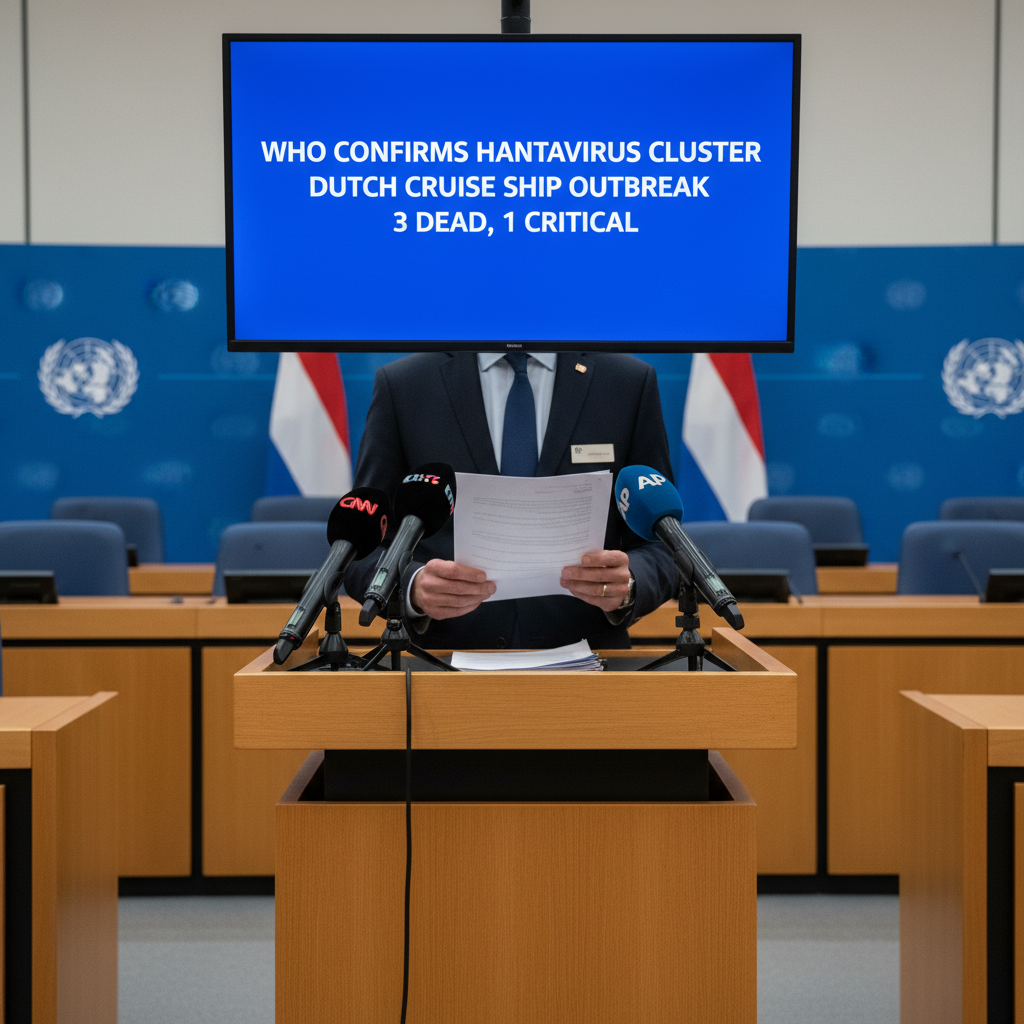
The World Health Organization is monitoring a cluster of hantavirus infections linked to a Dutch-flagged cruise ship traveling in the South Atlantic, with three passengers dead, one person in intensive care and the vessel currently held offshore near Cabo Verde.
The Details
The MV Hondius departed Ushuaia, Argentina, on 1 April 2026 carrying 88 passengers and 59 crew members representing 23 nationalities, according to the WHO. By 4 May, health officials had identified seven cases connected to the vessel: two laboratory-confirmed hantavirus infections and five suspected cases. Three of those cases have resulted in death, and one patient remains critically ill.
Oceanwide Expeditions, the Dutch cruise operator, told BBC News that a Dutch husband and wife and a German national died during the voyage. The two laboratory-confirmed infections are the Dutch woman who died and a 69-year-old British passenger who was medically evacuated to an intensive care unit in South Africa.
The timeline of the outbreak traces back to early April. On approximately 6 April, a Dutch male passenger developed fever, headache and mild diarrhoea while on board. By 11 April, he had developed respiratory distress and died on the ship. His body was removed at Saint Helena on 24 April. That same day, another adult male passenger presented to the ship's doctor with fever, shortness of breath and signs of pneumonia. The Dutch woman disembarked at Saint Helena with gastrointestinal symptoms and died in South Africa on 26 April; her infection was later confirmed by PCR. On 27 April, the British passenger was medically evacuated from Ascension Island to South Africa and later tested positive for hantavirus. A German female passenger with pneumonia died on 2 May, and the WHO received formal notification of the cluster that day. By 4 May, the WHO reported the ship was moored off Cabo Verde while response teams coordinated testing, isolation and possible evacuations.
Authorities have not allowed anyone to disembark in Cape Verde because of public health concerns, according to NPR, which cited WHO, Oceanwide Expeditions and Cape Verdean officials. NPR also reported that two crew members with respiratory symptoms urgently need medical care.
Context
Hantavirus is primarily acquired through contact with the urine, faeces or saliva of infected rodents. According to the WHO, symptoms observed in this cluster included fever, gastrointestinal distress, and rapid progression to pneumonia, acute respiratory distress syndrome and shock. The Centers for Disease Control and Prevention notes that hantavirus can cause hantavirus pulmonary syndrome, which often begins with fatigue, fever and muscle aches before potentially progressing to severe respiratory failure.
The WHO said the source of exposure remains under investigation, including whether passengers may have encountered infected rodents before boarding in Argentina or during stops in remote South Atlantic locations. Symptoms may appear from one to eight weeks after exposure, complicating efforts to determine whether infection occurred before boarding or during the voyage. There is no specific treatment for hantavirus infection, and care is supportive, with severe cases potentially requiring intensive care, oxygen support or other advanced interventions.
The outbreak has also drawn attention because hantavirus recently made international headlines after Betsy Arakawa, Gene Hackman's wife, died from a hantavirus-linked illness in New Mexico.
What's Next
The WHO assessed the risk to the global population from the outbreak as low, even as it advised symptom monitoring, isolation of suspected cases and ship sanitation measures. Cape Verdean authorities continue to coordinate the response while the ship remains offshore and no passengers or crew are permitted to disembark.
WHO official Ann Lindstrand, speaking in Cabo Verde, said, "It's been very tricky for Cape Verdean authorities. What they have to deal with is a public health event. And of course, they have been thinking about the protection of the population here." Hans Henri P. Kluge, WHO regional director for Europe, said, "The risk to the wider public remains low. There is no need for panic or travel restrictions."
The exact place and mechanism of exposure remain unknown, and the strain or lineage of hantavirus involved has not been publicly identified. WHO also said additional laboratory work, including sequencing, serology and metagenomics, was still underway, while samples from symptomatic passengers were being sent for more testing. That means the official tally and the explanation for where the virus was picked up could still change as investigators sort out whether the exposure happened before boarding or somewhere along the voyage.
Never Miss a Signal
Get the latest breaking news and daily briefings from Zero Signal News directly to your inbox.